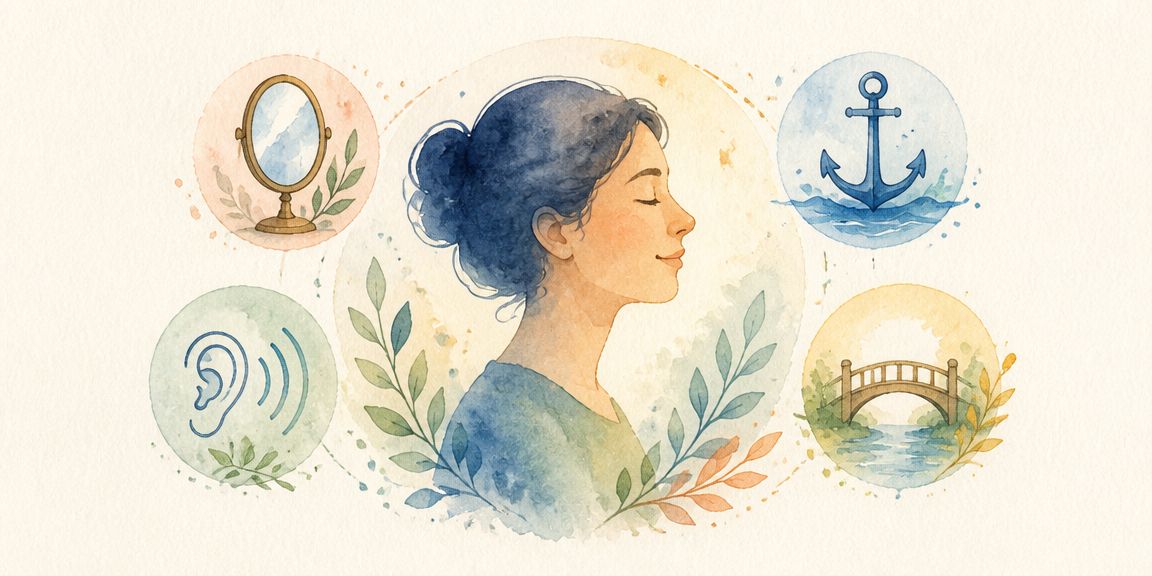
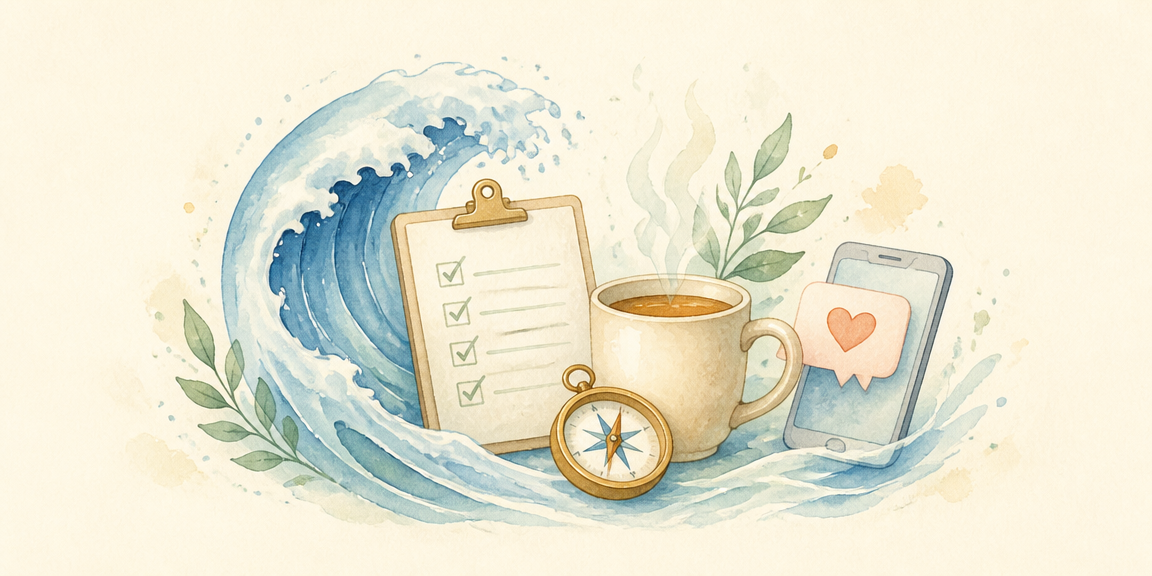
The quizzes in this section borrow from real psychological frameworks — attachment theory, emotional intelligence models, stress-coping research — and turn them into something you can sit with for ten minutes. That borrowing comes with an obligation to be precise about what these are: reflection content, built for self-noticing, written around everyday scenes. They are not screenings, not assessments, and not a substitute for talking to someone qualified. We repeat that often because the topics here — closeness, anxiety, how you cope when things crack — are exactly the ones where a casual quiz gets over-read.
The collection covers a few distinct territories. The attachment-style quizzes look at how you handle closeness, distance, and reassurance under relationship pressure — the six-hour unanswered text, the "I'm fine" that isn't. The emotional intelligence quiz treats EQ as four separate muscles rather than one score, and reads which one you reach for first. The stress quiz watches your first five minutes after bad news. What they share is a method: concrete scenes instead of self-rating scales, because almost everyone answers "are you good at handling emotions?" politely and then behaves differently in real life.
How to read a result from this page: as one plausible name for a pattern, offered for you to test against your actual week. If a line lands tender, that reaction is informative — stay with it a moment instead of scrolling past. If a result feels wrong, that's informative too. And if any of these topics currently feels heavy rather than interesting, skip the quiz and have the real conversation with a licensed professional. An online quiz is the wrong tool for distress, and we'd rather lose the page view than pretend otherwise.
For background, the psychology guide hub covers the Big Five, adult attachment in plain language, and the difference between an entertainment quiz and a validated instrument.