
Personality Guide — Frameworks, Myths, and Self-Reflection
A plain-language hub that introduces popular personality frameworks, what they can and cannot tell you, and how to use quiz results responsibly.
People reach for personality content for all kinds of reasons — curiosity, boredom on a bus, a hard week at work, a first date that felt off. This guide exists to help you use that curiosity well. It is not a textbook; it is a quiet, honest overview of the frameworks you will see across Selvora, the traps they often fall into, and the questions worth asking before you let a four-letter label become a story about yourself.
How to read this hub
This hub is not here to make you memorize a type or symbol. Start by noticing what kind of question the framework asks well, then where it can become exaggerated. If one explanation feels useful, compare it with a recent conversation or choice before treating it as an answer. If a sentence feels wrong, that reaction is also information. Selvora guides are written to leave you with observations, not verdicts.
What a personality framework actually is
A personality framework is a way of chopping up human differences into a small number of buckets that are easier to talk about than the messy truth. MBTI gives you four axes. The Big Five gives you five sliders. Enneagram gives you nine motivational types. None of these are real in the same way a bone or a blood test is real — they are models. Models are useful when they help you notice things you would not otherwise notice, and they get dangerous when they feel more solid than the person they describe.
What Selvora quizzes can (and cannot) tell you
Our quizzes are scenario-based pattern matchers. They weigh your answers against a set of result archetypes and show the one that fits your pattern best. That is the whole engine. They can spark reflection, give you language for something you already half-knew, or start a conversation with a friend. They cannot diagnose a disorder, predict your future behavior, or replace a conversation with a therapist or a coach.
How to use results without overidentifying
The healthiest way to read a quiz result is as a hypothesis, not a verdict. Ask: does this match how my closest friend would describe me? Is there one line that hit a nerve and one line that felt completely off? What does the disagreement tell me? When a result becomes a permission slip — "I am an introvert, so I cannot do this job" — the framework has stopped helping and started shrinking you.
Essays to read next
MBTI for Beginners — What It Is, What It Isn't
A short, plain walk through the four MBTI letters, the cognitive functions underneath, and the things MBTI cannot honestly do. For people who want to enjoy type content without getting flattened by it.
9 min read · 2026-04-22
Why Personality Tests Are Fun — But Not Diagnostic
There's a real, important line between a personality quiz and a clinical diagnosis. A clear-eyed walk through what each one actually is, why one entertains and the other treats, and how to enjoy quizzes without confusing them for medicine.
9 min read · 2026-05-21
How to Use Quiz Results Without Overidentifying
A short field guide for people who enjoy personality quizzes but don't want a four-letter code running their life. The shape of overidentification, and the small habits that prevent it.
9 min read · 2026-04-22
Personality Type Stereotypes Worth Letting Go
Personality memes are fun until they flatten real people. The stereotypes that keep recurring across MBTI, Enneagram, and zodiac content — and why each one is weaker than it looks.
8 min read · 2026-04-22
A Beginner's Map of Online Personality Frameworks
A calm tour of the frameworks you keep meeting online — MBTI, the Big Five, Enneagram, attachment theory, love languages, zodiac — with a plain-language take on what each is, where it's useful, and where it gets oversold.
10 min read · 2026-04-22
Should You Take a Personality Quiz When You're Moody?
Mood bleeds into every answer you give. Here's how to read a personality quiz result without mistaking a bad Tuesday for a permanent identity.
8 min read · 2026-05-08
More from this hub
Related quizzes
From the blog
The same territory, in a looser magazine voice.

How to Find Your Core Values (and Actually Use Them Day to Day)
Core values aren't pretty words on a poster. Here's a method to surface yours from past decisions, narrow 20 down to 4, and use them as a real decision filter.
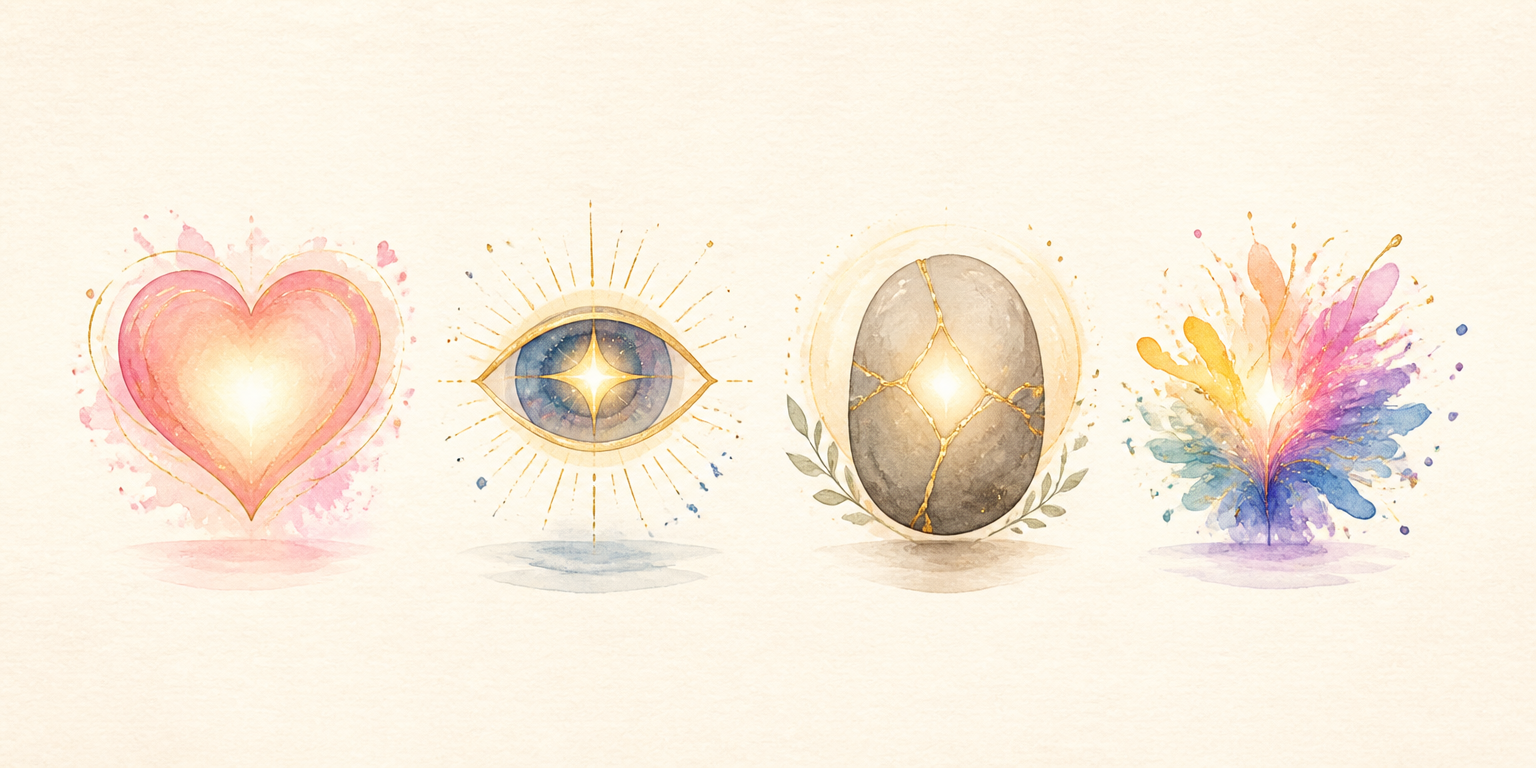
The 4 Secret Superpowers — Empathy, Intuition, Resilience, Creativity (and the Shadow Each One Casts)
Empathy, intuition, resilience, creativity — what each looks like on a normal day, the trap it quietly sets, and how to lean on it well.

What 'the Era You Belong To' Actually Says About Your Values
Ancient Greece, Medieval, Renaissance, Victorian, a far-future 2150. Each era result is a portrait of your values in costume, not a past life. Who resonates with which, honestly.
Entertainment notice: Selvora guides and quizzes are entertainment-oriented self-reflection tools. They do not replace clinical assessment, medical diagnosis, or professional counseling.