🔮 Tarot
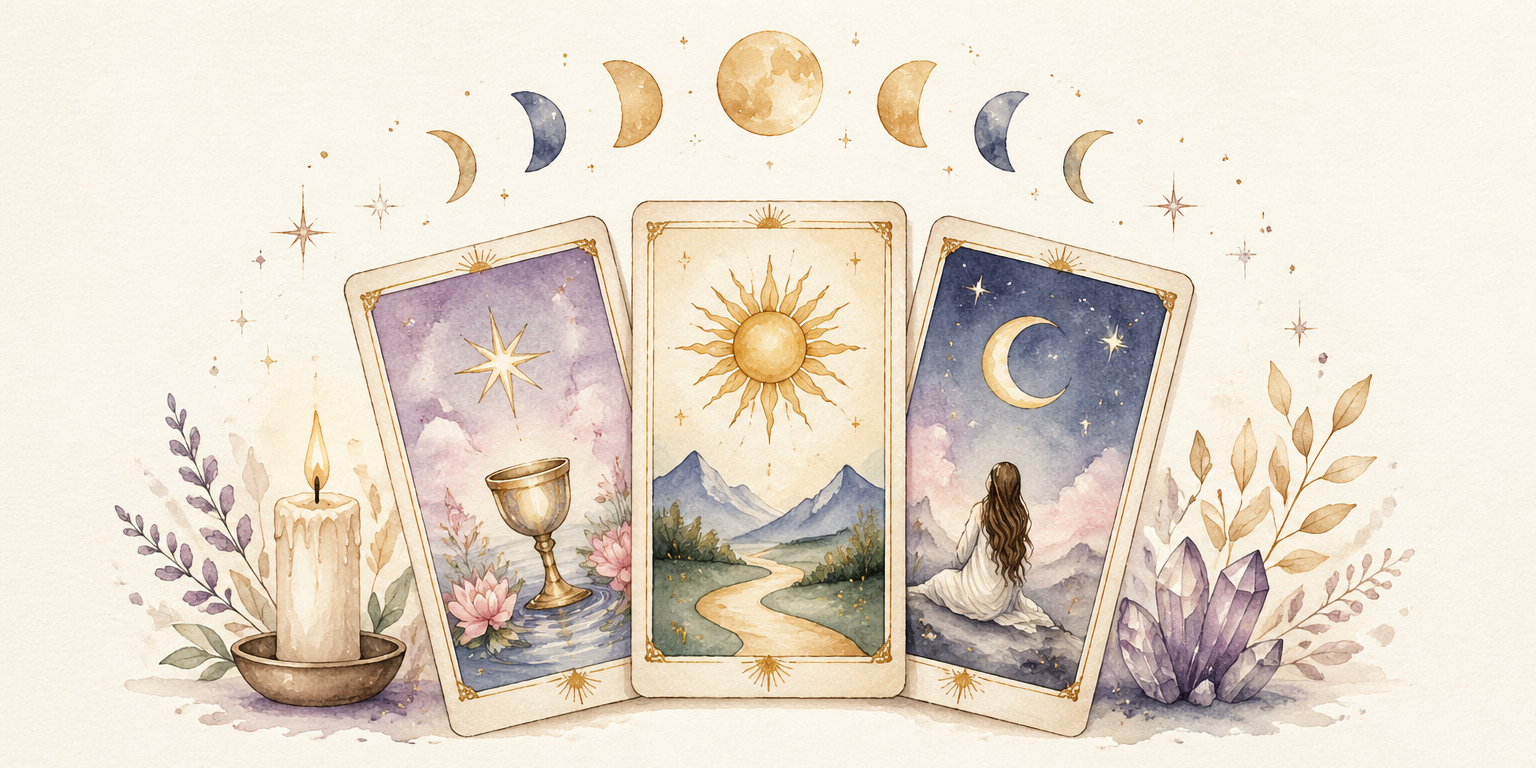
Three-Card Tarot Reading
Past. Present. Future. Draw three cards from the Major Arcana and use their traditional symbolism as a playful reflection prompt. A symbolic reading for entertainment — not a forecast.
📝 3 cards⏱️ 3 min
Tarot on Selvora is interactive entertainment with an old vocabulary. A shuffle is genuinely random — the card you get is the card your click landed on — and what we add is the traditional layer: the upright and reversed meanings readers have attached to each Major Arcana card over a few centuries, rewritten in plain reflective language. No prophecy, no "energy," no pretending the deck knows your week. What a card can do is hand you an image specific enough to think with, which turns out to be more useful than it sounds.
Two formats live here. The daily pull is one card to frame the day — quick, low-stakes, better as a small ritual than as an answer. The three-card spread lays out past, present, and future positions and reads them as one story; it's the better pick when you have an actual question you keep circling. Both draw from the full 22-card Major Arcana with upright and reversed orientations, so the same spread rarely reads the same way twice.
A suggestion from the people who wrote all of these interpretations: decide your question before you shuffle, and make it a question about you — your next step, your timing, your feeling — rather than about someone else's mind. Note your first reaction to each card before reading our text; the flinch or the relief arrives earlier than the interpretation and is usually more honest. And if a reading points at a decision that actually matters, treat the card as the start of your thinking, never the end of it.
The astrology & tarot guide hub has a longer piece on enjoying the cards exactly this way — symbols in, decisions out — and five journaling prompts for taking a card past your first reaction.
Tarot decks and astrology apps are everywhere — and they work best when you read them as imaginative content, not as forecasts. A grounded look at how to enjoy the symbolism, what tips it from play into harm, and how Selvora treats the genre.
9 min readA small, pretentious-free guide to using tarot cards as journaling prompts — written by people who don't promise the future, but do promise that better questions help.
9 min readAstrology is everywhere — short, visually pretty, sometimes uncannily specific. For the reader who likes it and wants a clear, non-moralizing guide to keeping it in the healthy zone.
8 min readA gentle, non-claimant introduction to astrology: what the sun sign tradition actually says, what it does not, and how to enjoy the imagery without outsourcing your decisions.
⭐ Read the Astrology Guide hubNo. The shuffle is random and we say so plainly. What you get is a centuries-old set of symbols plus our plain-language interpretation, which is useful the way a good journaling prompt is useful: it gives your own thinking somewhere to start.
The daily pull is one card, thirty seconds, a small frame for the day. The three-card spread reads past, present, and future positions as one story, and it's the better pick when there's a question you keep circling back to.
Reversed just means the card landed upside down, and tradition reads it as the upright theme blocked, delayed, or turned inward. It's not an omen. Some of the most useful readings come from a reversal naming exactly where things feel stuck.