Your result
Your Attachment Style is Secure!
Picture the moment a partner says they need a few days to cool off after a fight.

What this means
Picture the moment a partner says they need a few days to cool off after a fight. Most people would read that pause as a verdict. You read it as a Tuesday. Someone needs room, you give it, and you trust that the bond will still be standing on Friday. That steadiness isn't luck. Maybe it was handed to you by people who showed up consistently when you were small, or maybe you assembled it later, brick by ugly brick, through years of paying attention and a few relationships that taught you what you didn't want to repeat. Either way, you arrived somewhere solid.
Day to day, this looks almost boring from the outside, and that's the secret. You can hear hard feedback without your whole identity catching fire. You can say "that hurt me" without it turning into a three-hour interrogation. When you want reassurance, you ask for it in plain words instead of dropping hints and waiting for someone to fail a test they didn't know they were taking. You let love be a thing two people maintain together, not a contest one of you has to keep winning.
The genuine superpower here is regulation under pressure. You feel fear, longing, jealousy, all of it — you're not a robot. The difference is the gap you leave between the feeling and the move. In that gap you get curious instead of reactive. A partner goes quiet and your first instinct is a question, not a story you've already written about how this ends. That single habit spares you most of the suffering other people sign up for without realizing it.
Here's the part nobody warns you about. Your calm can land as coldness to someone whose nervous system runs hot. To a more anxious partner, your unbothered "I'm sure it's fine" can feel like you don't care enough to worry. And you can get quietly impatient with people who seem to manufacture drama when nothing's wrong, because it makes no sense to you why anyone would. That impatience is the edge of your blind spot.
In love, you tend to choose well and stay grounded, which can make you underestimate how much your steadiness does for the people around you. At work and with friends, you're often the one others come to mid-spiral, because being near you slows their heart rate. Use that on purpose. Just don't assume everyone can reach your baseline on command.
Put this style on a bad Tuesday and you can watch it work. The deadline moves up, the email thread catches fire, a coworker is typing in all caps. You triage instead of absorbing. You ask for help early, before the problem grows teeth, because asking has never felt like a confession to you. You can say "I don't know yet" in a meeting and let it sit there, unembarrassed. And when you do drop the ball, the self-talk runs more like a debrief than a trial: that happened, here's the fix, moving on. People assume that inner voice is standard-issue. It isn't. Plenty of competent adults carry a prosecutor to work every day.
The same pattern shows up in the small social stuff. In the group chat you reply when you reply, and you keep no ledger of who answered whom or how fast. A friend's message reads oddly flat? You figure tired before you figure angry. At a family dinner where an uncle lobs one of his pointed comments, you have options most people don't: let it sail past, or name it once, calmly, without torching the evening. None of this makes you immune. Hard weeks still land, grief still flattens you, you still lie awake some nights. The difference is that you rarely add a second story about what the bad week says about you as a person. Stress stays roughly the size of the actual problem.
One small nudge: treat someone else's slower pace as a language to learn, not a flaw to wait out. Your patience with a partner's anxious or avoidant patterns is its own quiet form of devotion — and it's the thing that turns secure-on-paper into secure-in-practice.
Key traits
Best paired with
Secure
How to read this result
A closer look at the "Your Attachment Style is Secure!" outcome of What's Your Attachment Style? — whether you just took the test or found this page from search.
Read it as a sketch of one answer pattern, not a fixed identity. Mood and timing move results like this more than people expect, so if a line lands, check it against a real week before you build anything on it.
Questions for reflection
- 1.Which line in the "Your Attachment Style is Secure!" description felt most like you this week, and which one missed?
- 2.When did "Emotional Regulation" last show up in a real situation, and did it help or get in the way?
- 3.If you took the same test on two very different days, which answers do you think would shift?
It is fine if no answer comes to mind right away. These are prompts, not verdicts.
Selvora results are entertainment for self-reflection and conversation. They are not mental-health, medical, legal, or financial advice — for decisions like those, please talk to a qualified professional.
Tomorrow's card
Tomorrow's card is already chosen — it just stays face-down until midnight.
Related reading
How to Set Boundaries Without Feeling Like the Villain
A boundary is a statement about your own behavior, not control of someone else's. Why it feels like betrayal, where the guilt comes from, plus scripts that work.
Learn MoreBurnout Recovery: What Actually Refills the Tank (and What Just Looks Like Rest)
Why a weekend off doesn't fix burnout, how passive numbing differs from real recovery, and how to match rest to the kind of depletion you're actually running on.
Learn MoreGo deeper — guide essays
Longer reads on how to use this result without locking yourself into a label — and where the framework actually stops being useful.
The Big Five, Without the Jargon
Five sliders instead of sixteen boxes. Why researchers trust the Big Five, what each trait looks like at the coffee machine, and where it quietly stops.
GuideEmotional Intelligence Is Four Muscles, Not One Gift
EQ isn't a trait you have or lack. It's four trainable skills, and they show up in the most ordinary moments of your week.
GuideAttachment Doesn't Only Happen in Bed: Patterns at Work, with Friends, and as a Parent
The four attachment patterns shape your group chat and your inbox, not just dating. A look beyond romance, and why a result is a snapshot, not a sentence.
Try Another

What If You Met Your Ex Again? 🔄
Sort through your lingering feelings and get a realistic analysis of reunion possibilities.
Start Quiz
Your Attachment Style Test 🧸
A playful self-reflection quiz exploring the attachment patterns that show up in your romantic relationships. Entertainment only — not a clinical assessment.
Start Quiz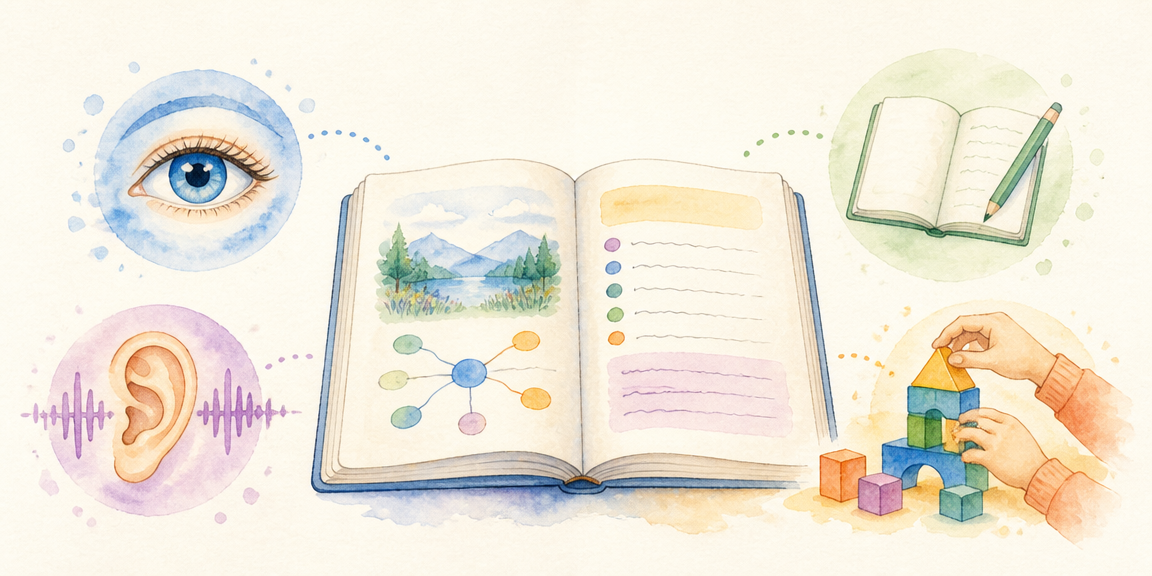
What's Your Learning Style? 📚✨
A playful look at how your brain prefers to take in new information — pictures, voices, written words, or hands-on practice. Use it as a starting point for studying smarter, not as a rigid label.
Start Quiz
What Kind of Friend Are You? 💛
A warm reflection on what you bring into a friendship — energy, listening, adventure, or the kind of loyalty that doesn't go anywhere. Tag your best friend at the end and find out theirs too.
Start Quiz