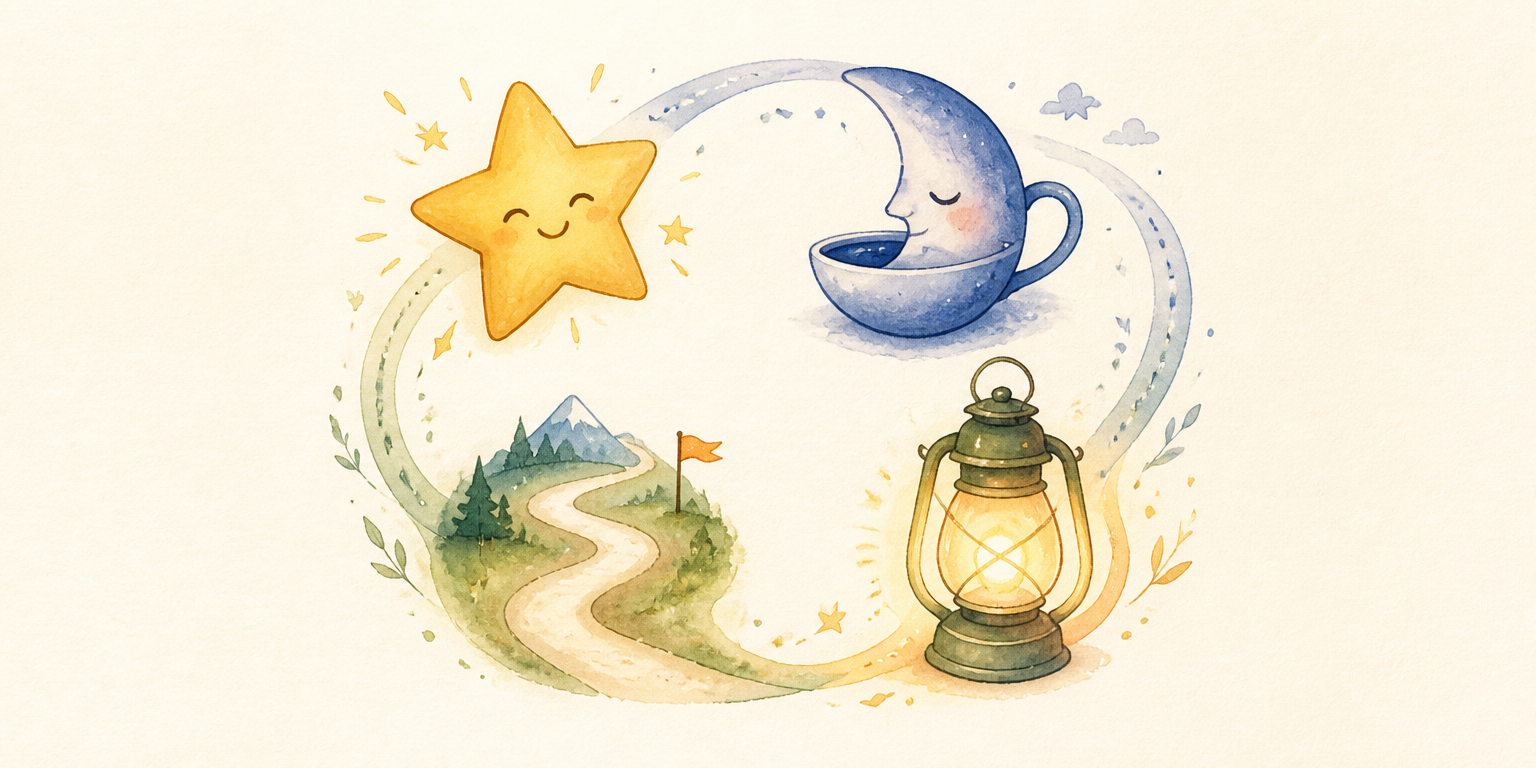
The Four Kinds of Friend, and Why Every Group Needs All of Them
You can tell a friend's type by their first text after you get dumped. Cheerleader, listener, adventure buddy, guardian — plus each one's shadow side.
Your friend just got dumped. They drop the news in the group chat. Within thirty seconds, four answers come back.
The first one: "honestly their loss, you're WAY too good for them, let's get drinks tonight." The second: "where are you right now, can I call?" The third: "ok new plan, we're driving to the coast tomorrow, I'll get the car, this is happening." The fourth one doesn't text anything. They just show up at the door forty minutes later with ice cream and no agenda.
Same event, four completely different reactions. That's what a friendship role actually is — not a ranking of who's the better friend, but the thing each person's body does on reflex when something goes wrong. This piece walks through the four roles: the cheerleader, the deep listener, the adventure buddy, and the loyal guardian. For each one, what they do under pressure, how they show up in the group chat, who they are at 2am, and the shadow side that nobody likes to look at.

The Cheerleader — Actually Believes "Their Loss"
The cheerleader's first text is almost scripted. "They didn't deserve you." "You're going to find someone so much better." Usually three exclamation points. In the group chat, the cheerleader is the one who raises the temperature. Somebody mentions a job interview and the cheerleader fires off "you've got this, no question" before anyone has any actual information about the company. They can't know the outcome. They just decide to believe it. That's the whole skill, really — believing in you on the days you can't.
Where the cheerleader genuinely shines is the scary first attempt. Quitting the job, sending the risky text, the five minutes before a presentation when your hands won't stop shaking. There's a voice in your head that says "they'd tell me I can do this," and that single voice gets you to take the step. It's why people quote things a cheerleader said to them years after the fact. "You told me I could do it that night, and that's actually why I tried." The encouragement sticks longer than the cheerleader realizes.
The shadow side shows up when honesty is what's actually needed. When a friend is about to go back to someone who was clearly bad for them, "do whatever feels right, I'm on your side no matter what" is not always love. Sometimes the loving move is "I adore you, and I think you're running away from the real thing here." A cheerleader who only knows the praise track becomes the friend who never says the thing you don't want to hear but need to. The best version cheers for the whole friend, including the part that's making a mistake. Encouragement plus the occasional hard truth is the upgrade, and it's harder than it sounds, because hard truths don't come naturally to someone whose default is hype.
The Deep Listener — "Where Are You, Can I Call?"
This friend doesn't suggest drinks. They don't try to lift the mood. They just call, and then they barely talk for an hour. One question — "so what happened" — and then they absorb whatever comes, the crying, the swearing, the contradictions. They don't cut in with advice nobody asked for. They let the silences sit there, unfilled, and inside those silences the friend ends up saying the real thing they didn't even know was true. Something like "honestly I think I was more scared of being alone than I was about losing them."
In the group chat the deep listener is on the quiet side. Not many jokes, rarely the one who plans the outing. But when somebody slips in a "things have been kind of rough lately," a one-on-one text arrives that same night. "Hey, that thing earlier — you good?" This friend remembers what gets said in the group chat. They know what their friend was struggling with last spring, and they know it never got resolved, so two months later they ask "hey, whatever happened with that?" That memory is exactly why people end up telling this friend their deepest stuff. It accumulates trust without anybody deciding it should.
At 2am, the deep listener is the voice on the other end of the phone — the number you call when something has cracked. Sleepy, maybe, but they stay on until you're done.
The shadow side: a deep listener can quietly turn into a mirror that never shows its own face. Everyone unloads on them, and when this friend is the one falling apart, nobody knows, because they've gotten too comfortable in the "I'm the steady one" identity to say so. So they go through their hard seasons alone while being everyone else's support line. Honestly, the better a listener you are, the more you need to sometimes be the one who says "I'm not doing great lately" first. Most listeners are surprised to find their people were waiting for that door to open the whole time.

The Adventure Buddy — "We're Driving to the Coast Tomorrow"
This friend's answer to everything is motion. Got dumped? Let's leave town. Feeling low? Let's go to the river at midnight. Where the deep listener goes deeper into the feeling, the adventure buddy pulls you out of it. They cover the sadness with a new experience. It's not always the right call, but sometimes it's exactly the call — when a friend is locked in their room running the same thought on a loop, "get up, put your shoes on, we're going" can be stronger than any comforting words. Stillness wasn't going to fix it that night.
In the group chat, this is the friend who makes plans actually happen. Everyone else has said "we should hang out soon" a hundred times, and the adventure buddy is the one who drops "Saturday, 7pm, that place, it's locked in." The night that should have ended at 10 going until sunrise is usually their doing. Years later, when friends say "remember when we randomly drove to the beach at 3am?" — that story exists because of this person. A lot of the most vivid memories in anyone's life are nights an adventure buddy dragged them into. The good stories don't generate themselves.
At 2am, the adventure buddy is the one texting "you up? me too. wanna go somewhere?" It's a different shape of comfort, but it's still comfort.
The shadow side: the adventure buddy can mistake doing things together for being close. Five trips together is not the same as one real conversation in the kitchen at 1am, and the two are easy to confuse from the inside. Some friends need adventure with you. Some friends need someone to just sit there. If the adventure buddy can't read which one is needed, they'll drag a friend out to "take your mind off it" on a night that friend desperately needed to cry — and accidentally make them feel more alone in a crowded bar. They also run fast by default, and not everyone can match that every week. Loving an adventure buddy sometimes means being the one who asks for a slow Sunday.
The Loyal Guardian — Shows Up Instead of Replying
This friend isn't the loudest in the group chat. They're not the first text on a Friday night. But when something actually breaks, they're the first to act. Instead of crafting the perfect response to the breakup news, they just come over. Ice cream in a bag. They don't say much. They sit next to you, and that's the whole offering, and it's enough.
The loyal guardian's particular gift is witnessing the long arc of a person's life. They remember who you were at nineteen. They watched you survive whatever you survived. Six months of silence, and when you reconnect it's like no time passed — you pick up exactly where you left off. The no-questions-asked airport pickup and the genuine 2am phone call belong to this friend. As you get older, you accumulate very few witnesses like that, which is what makes one rare and worth protecting.
This friend is hard to fool. They can tell instantly whether your "I'm fine" is real. They won't push in the moment. But they file it away and quietly circle back two days later. "That thing the other day — you actually okay?"
The shadow side is subtle. Loyalty without honesty curdles into just going along with everything. "They're my friend" can become the excuse to ignore a pattern a less loyal friend would have flagged years ago. The loyal guardian also stays too long in friendships that have stopped being mutual, because staying is their whole identity — and honestly, the person who always stays deserves people who stay for them the same way. The full-strength version of loyalty is being able to say "I love you, I'm here, and I think this is the third time we've had this exact conversation." Presence plus truth, not presence instead of it.
What Happens When All Four Are in One Group
The healthiest friend groups usually carry some mix of all four. A group of nothing but cheerleaders feels amazing right before a big decision, but nobody ever says "wait, are you sure about this?" A group of only deep listeners has rich conversations and somehow never does anything. A group of only adventure buddies racks up stories but never sits still long enough to reflect on any of them. A group of only loyal guardians feels safe and a little small, like a room that's warm but never gets aired out.
The interesting part is that each role pairs best with its opposite. Put a deep listener next to a cheerleader and the listener slows the cheerleader's hype down until it actually means something, while the cheerleader reminds the listener they're worth hyping too. Put a loyal guardian next to an adventure buddy and the guardian gives the adventurer a steady place to land, while the adventurer keeps the guardian's world from shrinking. Having one friend who is your opposite type is one of the most underrated forms of friendship insurance — they cover the color you can't see. If you want to dig into why these pairings fill each other in, the personality guide hub goes deeper on the dynamics.
Here's the thing I most want to land, though. Don't use this to rank your friends. "My favorite is the listener, the loyal guardian comes in fourth" — the second you start scoring people, the whole fun of it drains out. The loyal guardian not leaving at 2am and the cheerleader texting "you've got this" the night before an interview are not even comparable. They're different kinds of love for different moments. And the same friend often pulls out all four depending on the situation — the usual deep listener who suddenly, on the worst night, drags you to the coast instead of letting you sink. People aren't one fixed role. They're a default with exceptions.
So, Which One Are You
The useful part of knowing your role is that it shows you what you give your friends on autopilot. The cheerleader catches themselves answering everything with praise. The deep listener checks whether they ever let anyone hold space for them. The adventure buddy notices when they're dragging instead of inviting. The loyal guardian notices the moment they should have said something harder than just being present. Once you know your default, you can consciously add the color you're missing instead of running the same move every time.
A quick ten-question read on your type lives in the what kind of friend are you quiz. The most fun way to do it is to take it, then throw it in the group chat and have everyone do it at once — you can see your whole group's shape, and which color you're collectively short on. If you want to keep poking at relationships and self-knowledge, the full guides are a good next stop.
For what it's worth, this isn't a scorecard for ranking your friends. It's a mirror for how you tend to show up in front of them. People bring different colors in different seasons, and real friendship never fits cleanly into four labels. Read it for fun, send it to the group chat, and laugh about who got what. 😊
Related picks
This section may contain Coupang Partners affiliate links. We may earn a commission from qualifying purchases.
성격 심리 책
자기이해 워크북
무지 노트
Try This Quiz
Taking the quiz is even better than reading about it!
Related Articles
The 4 Secret Superpowers — Empathy, Intuition, Resilience, Creativity (and the Shadow Each One Casts)
Empathy, intuition, resilience, creativity — what each looks like on a normal day, the trap it quietly sets, and how to lean on it well.
Read More
What 'the Era You Belong To' Actually Says About Your Values
Ancient Greece, Medieval, Renaissance, Victorian, a far-future 2150. Each era result is a portrait of your values in costume, not a past life. Who resonates with which, honestly.
Read More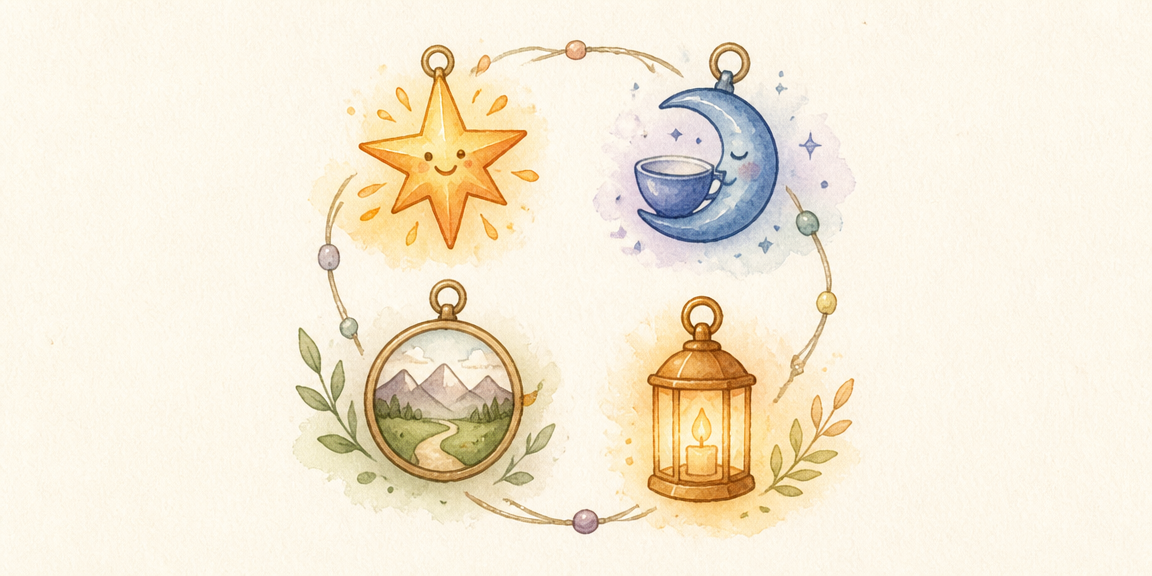
The 4 Friendship Types: Cheerleader, Listener, Adventurer, and Loyal Guardian
Friends bring different things to the table — energy, deep listening, adventure, and steady loyalty. A practical look at the four friendship types and how they fit together.
Read More