
Why You Freeze on Small Choices but Nail the Big Ones (Your Decision-Making Style)
You can pick a career or end a relationship, but a lunch menu wrecks you. A plain look at decision-making styles, why low-stakes choices are secretly harder, and how to move faster.
The Lunch Menu That Beat You
You quit a stable job last year. You ended a four-year relationship the year before that. You picked the city you live in, the field you work in, the apartment you signed for. Big, irreversible, expensive calls, and you made every one of them without falling apart.
Then you stood in front of a lunch menu for eleven minutes and could not decide between the bowl and the sandwich.
If that gap drives you a little crazy, you're not broken and you're not indecisive in some global way. You just have a decision-making style that handles weight and stakes in a particular order, and small low-stakes choices happen to poke the exact spot where it jams. This piece is about why that happens, what your style is actually doing under the hood, and how to stop losing your afternoons to a takeout app.
The Styles, in Plain Language
There's a whole industry of decision "types," and most of it overstates how fixed they are. You're not one thing forever. But there are a few real tendencies that show up again and again, and naming them helps. Think of these as dials you sit somewhere on, not boxes you live in.
Maximizer vs. satisficer. This is the big one. A maximizer wants the best option and won't settle until they're sure they've found it. A satisficer wants a good enough option that clears their bar, and once it clears, they're done looking. Hand both of them the same restaurant list. The satisficer picks the first place that sounds decent and closes the app. The maximizer reads nine more reviews, checks the menu twice, cross-references a food blog, and arrives at the same restaurant the satisficer chose forty minutes ago, except now slightly anxious they got it wrong.
Gut vs. analysis. Some people decide from a fast internal read and then explain it later. Others lay out the variables, weigh them, and let the structure point at an answer. Neither is smarter. Gut deciders are quick and usually fine on familiar ground, but they get burned on genuinely new problems where their instinct has no data. Analysts are steadier on new problems and slower on everything, including the choices that did not deserve a spreadsheet.
Fast vs. deliberate. This is partly tempo and partly tolerance for being wrong. Fast deciders would rather make a call, watch it land, and adjust. Deliberate deciders would rather get it right the first time and will spend real time to do it. The fast person makes more mistakes and recovers from them quickly. The deliberate person makes fewer and pays for that in hours.
Most people are a mix, and the mix shifts by domain. You can be a ruthless satisficer about clothes and a tortured maximizer about anything involving other people's opinions of you. That mixing is the whole reason the big-small gap exists.
Why Small Choices Are Secretly Harder
Here's the part nobody says: the size of a decision and the difficulty of a decision are not the same thing, and they often run in opposite directions.
Big decisions come with built-in seriousness, so you give them the right tools. You think for days. You ask people. You write the pros and cons down. You accept that you can't be certain and you commit anyway, because the weight of the thing forces you to. The stakes do half the work. They organize your attention and give you permission to stop optimizing and just choose.
Small decisions get none of that. There's no scaffolding, no deadline, no felt seriousness. So a maximizer's brain, left with no external brake, applies the same hunt-for-the-best engine to a problem that doesn't deserve it. The bowl versus the sandwich gets the analytical horsepower you'd want aimed at a job offer. And because the stakes are tiny, there's no force that makes you stop. A big decision ends because it has to. A small one can run forever, because nothing punishes you for circling.
Three things pile on:
The first is decision fatigue. Every choice you make spends a little willpower, and the tank drains over a day. That's why you can be sharp at 9 a.m. and paralyzed by a dinner menu at 7 p.m., not because dinner is hard, but because it's the four-hundredth decision since you woke up. The afternoon you can't pick anything is usually a tired afternoon, not a difficult one.
The second is the fear of a wrong "optimal." For a maximizer, picking the second-best feels like a small failure, even when the gap between options is meaningless. Choosing the bowl means accepting you might have liked the sandwich more, and that tiny ghost of regret is genuinely uncomfortable for some people. So you stall to avoid feeling it, which is a strange trade: you spend real time and stress to dodge a regret that would've lasted thirty seconds.
The third is just too many options. A menu with six items is easy. A menu with sixty, plus four delivery apps, each with filters, is a part-time job. More choice feels like freedom and acts like a tax. The bigger the field, the harder the satisficer's "good enough" bar is to even locate, because good enough compared to what?
How Your Style Plays Out at Work
The same wiring that ruins your lunch shapes your career, which is exactly why aptitude and "what fits me" questions are downstream of how you decide, not separate from it.
Picture a maximizer-analyst in a product meeting. Someone proposes a quick fix. The maximizer immediately sees four edge cases, two better approaches, and a reason the obvious option is subtly wrong. On a real problem, that's gold. They catch the thing everyone else missed. On a trivial problem, they're the person re-litigating the color of a button while the deadline burns. Their strength and their weakness are the same trait pointed at different-sized targets.
Now the fast, gut-led deciders. They're the ones who unstick a frozen room. They'll make the call, ship the thing, and learn from how it lands. Teams love them in a crisis. The cost shows up later, when a decision that genuinely needed analysis got the same thirty-second treatment as everything else, and now there's a mess to clean up that a few hours of thinking would have prevented.
The honest move is to match your style to the stakes on purpose instead of defaulting. A satisficer should let themselves satisfice on the hundred small calls a week that don't matter, and save their full attention for the two that do. A maximizer should notice when their engine has latched onto something trivial and physically pull it off. If you're trying to figure out which kind of work actually suits how you think, the career-fit quiz is a low-stakes place to start, and this guide on using a career result without letting it run your life is the honest follow-up on what to do with whatever it tells you.

How It Plays Out in Relationships
Decision style shows up in love faster than almost anywhere, because relationships are a firehose of small choices with no rubric. Where to eat, whose family for the holiday, how to spend a free Saturday, which couch.
A maximizer in a relationship can quietly exhaust a partner, not through big fights but through the relentless optimizing of small stuff. "Are you sure this is the best place?" lands, over months, as "nothing I pick is ever quite right." Meanwhile a fast, gut-led partner can read as careless to a deliberate one: they booked the trip without checking, said yes without thinking it through, and the deliberate partner is left feeling steamrolled.
The friction usually isn't about the actual choice. It's a mismatch in how much process a decision deserves. One person thinks picking a restaurant should take ninety seconds; the other thinks it deserves real thought because the evening matters. Both are reasonable. They're just running different software. Naming that out loud — "I default to good-enough, you default to best, neither of us is wrong" — defuses an astonishing amount of low-grade resentment. If you keep ending up with people whose style clashes with yours in the exact same way, the pattern of falling for the same type is worth a read.
Analysis Paralysis, and How to Actually Break It
Analysis paralysis is what happens when the gathering-and-weighing loop stops converging. You keep adding information, but the information stops changing your answer. You're not deciding anymore. You're stalling with extra steps and calling it diligence.
The tell is simple: ask yourself whether the next piece of research could actually flip your choice. If you've read four reviews and the fifth won't change anything, you're done. You're just scared to commit. More data past that point is a comfort blanket, not a tool.
What breaks it is almost never "think harder." It's adding a constraint that forces a stop. A few that work:
Set a timer proportional to the stakes. A ninety-second choice gets ninety seconds. A medium one gets the length of a coffee. When the timer ends, you go with whatever's ahead, and you accept that. The timer is doing the job the stakes do automatically on big decisions: forcing a close.
Make a default rule and stop re-deciding. Pick once, for a whole class of choices, and then never spend energy on it again. Same breakfast on weekdays. Always the aisle seat. When two options are genuinely close, take the cheaper or faster one without agonizing. A default is a decision you make one time so you don't pay for it daily.
Flip a coin and read your reaction. This is the underrated one. Assign the options to heads and tails, flip, and notice the half-second of feeling before you look — or the small "ugh" or "oh good" when you see the result. That flinch is your gut answer, which was there the whole time, buried under the analysis. You don't even have to obey the coin. You just have to watch yourself respond to it.

The Shortcut Almost Nobody Uses: Values
Here's the thing that cuts decisions faster than any technique: knowing what you actually care about. Most slow decisions are slow because you're trying to optimize across goals you've never ranked. You want the cheap option and the nice option and the convenient option and the impressive option, all at once, and they conflict, so you spin.
When you know your top one or two values for a given domain, half the options disappear instantly because they fail the first filter. If you genuinely know that, for your work, autonomy beats prestige, then the prestigious job that controls your every hour is a fast no. You don't need a spreadsheet, you need to remember what you decided you wanted. The deciding got slow because the wanting was never settled.
This is why people with a clear sense of their own values look decisive and people without one look scattered. It isn't that the first group thinks faster. It's that they're choosing against a stable yardstick instead of inventing the yardstick fresh for every choice. If you've never actually mapped what you weight most, the Enneagram's nine core motivations is one decent lens for noticing what quietly drives your choices, and looking honestly at how you cope under stress tells you a lot about which decisions you avoid versus charge at. Neither is a diagnosis. They're just mirrors that sometimes show you a value you'd never said out loud.
A Few Moves That Actually Stick
The goal isn't to become a different person. A maximizer won't satisfice their way into a new personality, and a gut-decider won't turn analytical by Tuesday. The goal is smaller: spend your decision energy where it pays off and stop spending it where it doesn't.
Match the effort to the stakes, on purpose. Before you sink time into a choice, ask one question: if I get this wrong, what's the actual cost? If the answer is "a slightly worse sandwich," give it nine seconds and move. Save the deliberation for the calls where being wrong actually hurts. Most of life is sandwiches.
Reduce the number of decisions you face at all. Default rules, fewer open tabs, a shorter menu of regular options. Every choice you automate is willpower you keep for the afternoon, when you'll actually need it. People who seem effortlessly decisive have usually just pre-decided most of their day so the tank is full when something real comes up.
And notice your own gap. The fact that you can make the huge calls means you're not actually bad at deciding. You're just letting small choices borrow tools built for big ones. Once you see that clearly, the lunch menu loses most of its power, because you finally know it never deserved the meeting you keep giving it.
If you want to understand how you process choices and information more generally, your learning style overlaps a lot with your decision style, and the broader aptitude guide hub collects the pieces on how the way you're wired meets the work you do.
A note on framing: the quizzes and frameworks here are lenses for self-reflection and entertainment, not clinical tools. "Maximizer" and "gut decider" are useful shorthand, not diagnoses, and a quiz can't tell you what will happen if you take the job or leave the relationship. If indecision has tipped into something that's genuinely eating your days and your peace, that's worth raising with a real professional, not a takeout app.
Some of the frameworks here are well-researched, some are mostly tradition. The books and studies behind each one — and how solid each is — are listed in our editorial sources.
Take the quiz
What Career Actually Fits You?
Reading about it is good — finding your own result is better.
Related Articles

You Got Your Career-Fit Result. Now What? Using a 10-Minute Quiz Without Letting It Run Your Life
A career-fit result is one input, not a verdict. What to do with it: questions to ask yourself, cheap experiments, and talking to people who do the work.
Read More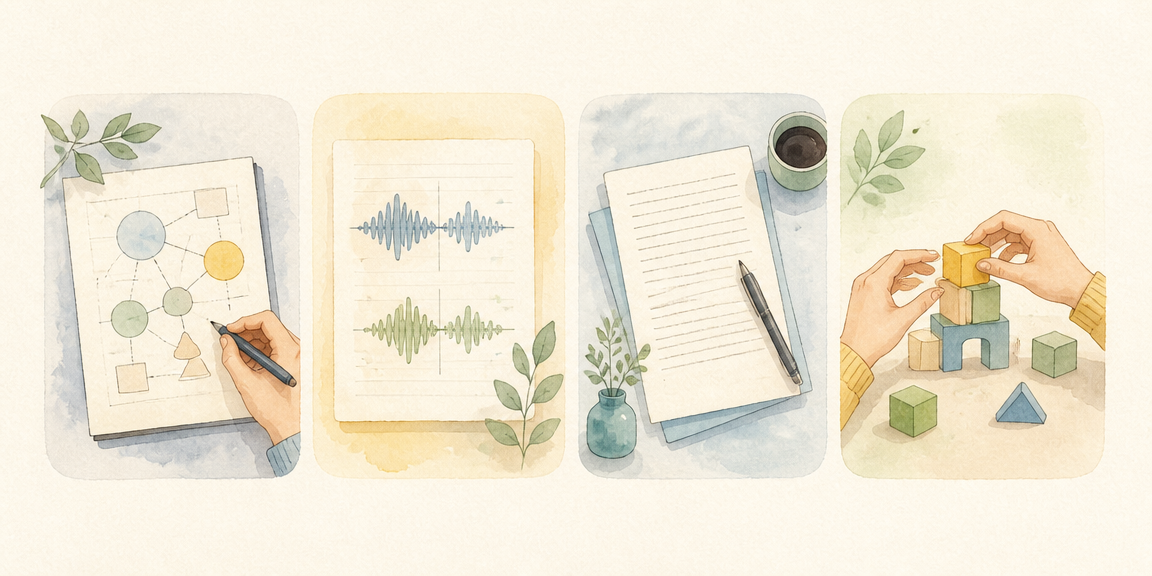
VARK Learning Styles: How to Study With the Way Your Brain Actually Works
Visual, auditory, reading-writing, kinesthetic — practical study strategies for each VARK style. Knowing your dominant mode changes what you get from the same hours.
Read More
Personality Tests at Work: What's Legit and What's Not
Why MBTI for hiring is a bad call, what holds up better, and how a team can use type results without boxing anyone in.
Read More