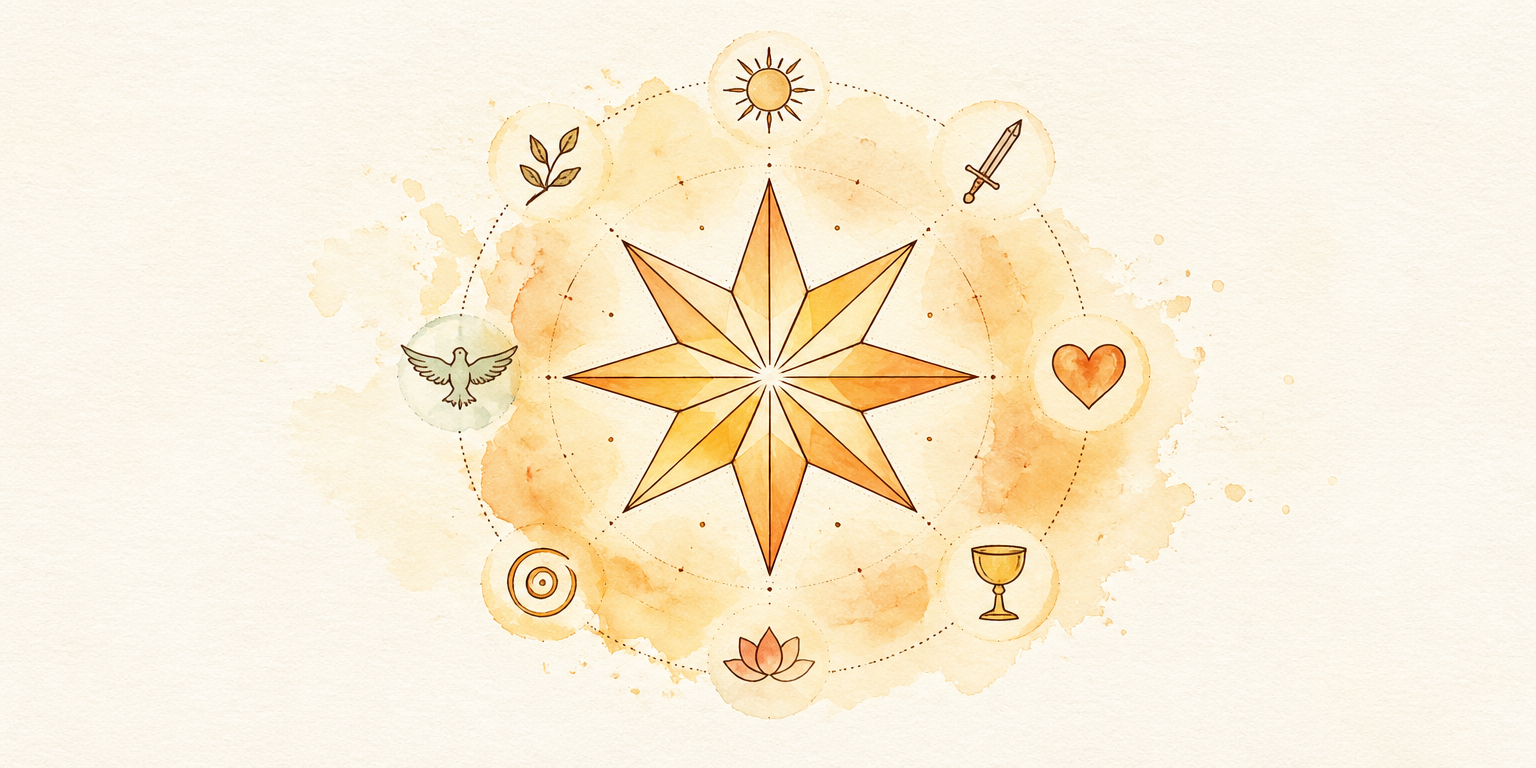
Your result
Type 1 — The Reformer ⚖️
There's a half-second after someone hands you a finished piece of work where your eye goes straight to the one thing that's off: the misaligned margin, the sentence that overstates, the corner that got cut.

What this means
There's a half-second after someone hands you a finished piece of work where your eye goes straight to the one thing that's off: the misaligned margin, the sentence that overstates, the corner that got cut. You didn't decide to look for it. It just surfaced, the way a sour note surfaces for a musician. That instinct is the engine of Type One: a built-in sense that things have a correct shape, and a quiet ache when they don't match it. Underneath sits the real motive — not to be admired, but to be genuinely good, the kind of good that holds up when nobody's checking. Your deepest fear is that you're secretly flawed or corrupt, so you've spent years trying to leave no room for that to be true.
Day to day, this means you run a commentary track most people can't hear. You catch yourself mid-sentence and revise it for fairness. You replay a meeting wondering if you were too harsh, then wonder if you were too soft. You hold the receipt, return the extra change, finish the boring part of the task because skipping it would feel like lying. People lean on you precisely because you can't be bought and you don't cut corners — your word is load-bearing.
Here's the cost. That inner critic doesn't clock out. It edits your rest the same way it edits your work, so even your downtime gets graded. Resentment leaks in sideways, too. You do the thing right while everyone else coasts, and a tight, unspoken frustration builds because they don't seem to care that there's a right way at all. You rarely say it out loud, which is partly why it festers.
In love, you show care through reliability and small acts of correctness: you remember the anniversary, you keep the promise, you do the dishes the way you said you would. But a partner can feel quietly audited, like there's a standard they keep almost-meeting. At work you're the one who flags the problem before it ships, which is invaluable and occasionally exhausting for the room. The growth edge is the same in both places: the standard is yours, not theirs, and you don't have to enforce it on people who didn't sign up for it.
Stress has a specific soundtrack for a One. The commentary track stops critiquing the work and starts circling one question: why am I the only person who takes this seriously? On bad weeks that curdles into something moodier — you go quiet, feel strangely misunderstood, and the usual crisp judgment fogs over into wondering whether any of it matters. Watch yourself at work the next time you finally delegate something. A teammate does the task differently, not wrong, just differently, and your hands itch. Half the time you "fix" it at 11pm instead of saying anything, which keeps the peace and quietly teaches you that nobody else can be trusted.
Friendship runs on the same ledger. You're five minutes early; they're twenty late, again; you say "no worries" with a jaw that disagrees. You organize the trip, return the borrowed book in better condition than you got it, and quietly wonder why effort only flows one direction. The growth direction is almost suspiciously fun-shaped: borrow a page from the Sevens. Fun isn't a reward you collect after the list is done — it's how the standard loosens its grip. A One who can laugh mid-mistake is a One whose goodness finally stops needing a verdict.
Try this. Pick one thing this week and do it at eighty percent on purpose — the email that's good enough, the dinner that's just fine — and watch the ceiling not fall in. The mistake doesn't make you bad. The fact that you care this much was always the proof you were looking for.
Key traits
Best paired with
Type 7 (The Enthusiast) and Type 2 (The Helper)
Being corrupt, evil, or defective
To be good, ethical, and have integrity
In growth, moves toward Type 7 — becoming more spontaneous, joyful, and accepting of imperfection
Under stress, moves toward Type 4 — becoming moody, irrational, and emotionally volatile
You may also identify with Type 9 (The Peacemaker) or Type 2 (The Helper) as your wing.
How to read this result
A closer look at the "Type 1 — The Reformer ⚖️" outcome of What's Your Enneagram Type? 🔢 — whether you just took the test or found this page from search.
Read it as a sketch of one answer pattern, not a fixed identity. Mood and timing move results like this more than people expect, so if a line lands, check it against a real week before you build anything on it.
Questions for reflection
- 1.Which line in the "Type 1 — The Reformer ⚖️" description felt most like you this week, and which one missed?
- 2.When did "Principled Integrity" last show up in a real situation, and did it help or get in the way?
- 3.If you took the same test on two very different days, which answers do you think would shift?
It is fine if no answer comes to mind right away. These are prompts, not verdicts.
Selvora results are entertainment for self-reflection and conversation. They are not mental-health, medical, legal, or financial advice — for decisions like those, please talk to a qualified professional.
Tomorrow's card
Tomorrow's card is already chosen — it just stays face-down until midnight.
Related reading
How to Find Your Core Values (and Actually Use Them Day to Day)
Core values aren't pretty words on a poster. Here's a method to surface yours from past decisions, narrow 20 down to 4, and use them as a real decision filter.
Learn MoreEnneagram 9 Types — Find the Motivation Underneath the Behavior
From Type 1 Reformer to Type 9 Peacemaker — each Enneagram type's core motivation, strengths, blind spots, growth direction, and a familiar figure to anchor the read.
Learn MoreGo deeper — guide essays
Longer reads on how to use this result without locking yourself into a label — and where the framework actually stops being useful.
How to Use Quiz Results Without Overidentifying
A short field guide for people who enjoy personality quizzes but don't want a four-letter code running their life. The shape of overidentification, and the small habits that prevent it.
GuideWhat Makes Online Quizzes Feel So Accurate?
The jaw-drop moment when a quiz "sees" you isn't magic. A walk through the craft behind accurate-feeling quizzes — scenario questions, overlapping descriptions, the Barnum effect — and what separates a good quiz from a clever trick.
GuideEnneagram's 9 Types in Plain Language
From the outside the Enneagram can feel mystical and jargon-heavy. Strip the foam off and what's left is honest: nine answers to a question nobody asked out loud, and how each one looks on a normal Tuesday.
Try Another
What's Your Attachment Style?
A light reflection on the attachment patterns your answers lean toward — secure, anxious, avoidant, or disorganized — and what that might mean for how you show up in relationships. Entertainment and self-reflection only, not a clinical diagnosis.
Start Quiz
What's Your Love Language? 💕
Everyone gives and receives love differently. This quiz points to your primary love language — the way you most naturally express and receive love.
Start Quiz
Love Language Compatibility 💞
How compatible are your love languages? Take this together or answer for both of you.
Start Quiz
Quick IQ-Style Logic Quiz 🧩
25 sequence, pattern, logic, language, and spatial puzzles across 5 difficulty levels. Your result is a quiz-based estimate for fun — not a clinical IQ score.
Start Quiz