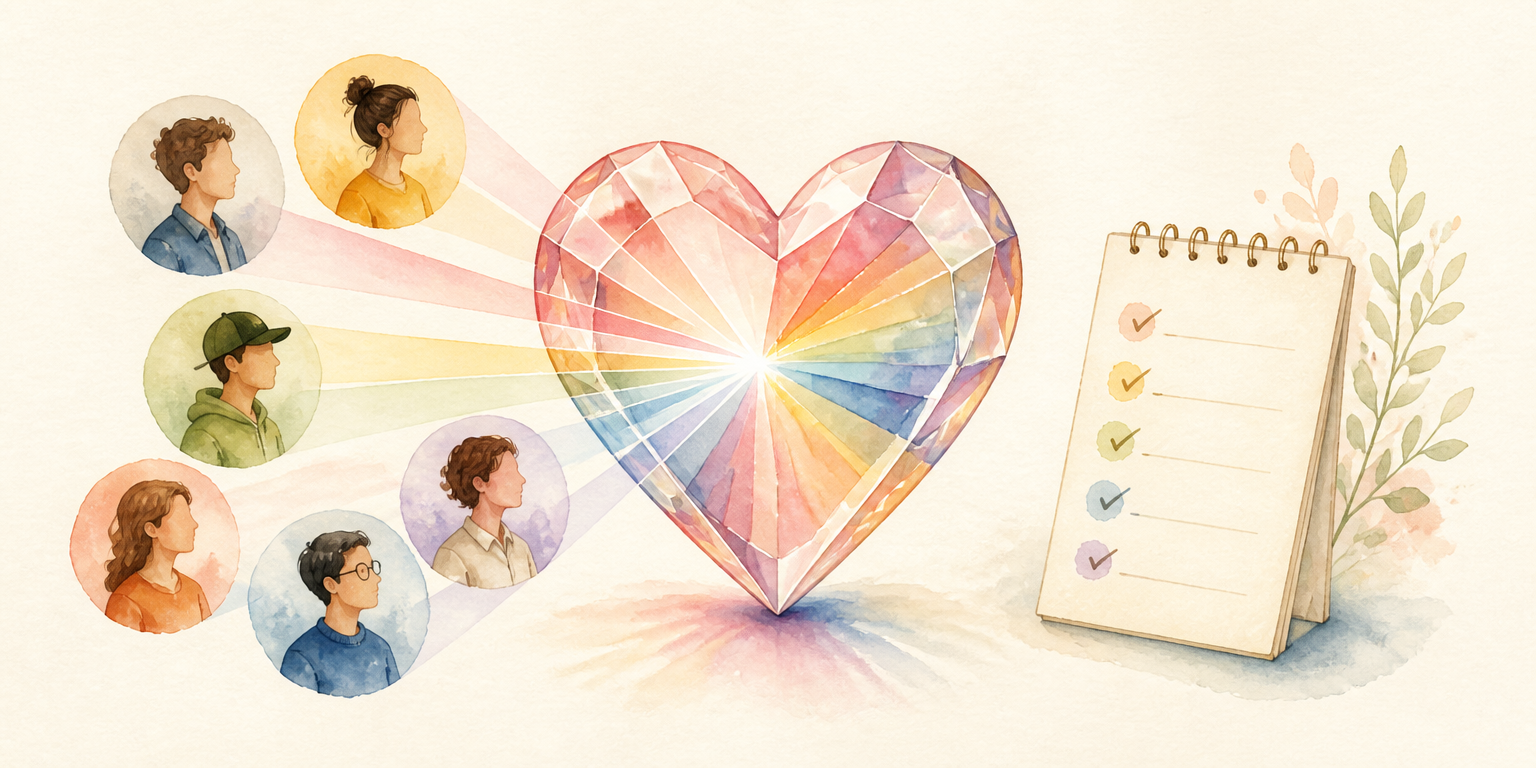
The Psychology of Having a Type (And Why Yours Keeps Lying to You)
Why we fall for the same kind of person, the gap between the type you claim and the one you chase, and when a type quietly screens out good people.
Your Friend Set You Up With the Same Person Again
A friend swears this one is different. "Totally not your usual type," they say. So you go. And an hour into the conversation, something feels oddly familiar. The cadence of how they talk, the way they joke, the particular flavor of their attention. The job is different, the face is different, the city they grew up in is different. But the texture is the same. You know this person. You've dated this person.
I did this for years before I noticed. When I finally laid out my past relationships side by side, the surface details were all over the map. Different looks, different careers, different everything. But there was one thread running through all of them: they were a little unavailable. Slow to text back, stingy with affection, always one step out of reach. Which was awkward to admit, because for years I'd been telling everyone I wanted someone warm.
That's the thing about a "type." The type you describe out loud and the person who actually keeps you checking your phone are often two different people. This post is about that gap, honestly. Whether you take the ideal type analyzer before or after reading, it's worth sitting with for a minute.
Attraction Is Usually Familiarity Wearing a Disguise
That electric feeling. The fated, can't-breathe pull of meeting someone who just *gets* it. Honestly, from a psychology standpoint, that feeling is less romantic and more unsettling than we'd like. A lot of the time, what we read as chemistry is just recognition.
Your brain learned what love looks like before you had words for it. How attention gets shown. How conflict gets handled. What it feels like when someone cares, or pretends to, or doesn't. You absorbed all of it in your first family, and your nervous system filed it under "normal" — whether or not it was healthy. So when you meet an adult who carries that same texture, some old part of you relaxes and goes, *oh, this. I know this.* The trap is that comfort and health are not the same thing. They just feel the same in the first three weeks.
Here's a concrete version. Someone raised by a parent who was always busy, always half-present, will often feel a strange tug toward distant partners. The indifference is recognizable, so it registers as calm. Flip it around: hand that same person someone consistently warm and attentive, and they'll often get itchy. It feels fake. Too much. Suffocating. And they'll find a reason to leave. Ever bailed on someone who was genuinely good to you and couldn't fully explain why? That's the mechanism.
There's a deeper layer underneath that, too. We don't just repeat what's familiar — sometimes we chase it to fix it. The person who grew up with a withholding father and then exclusively dates withholding people isn't being dumb. There's an unconscious mission running in the background: *this time I'll be the one who finally cracks them open. This time it'll be different.* It's an old unfinished assignment, re-submitted to a new person. And the sad math of it is that the same kind of person tends to deliver the same kind of ending.
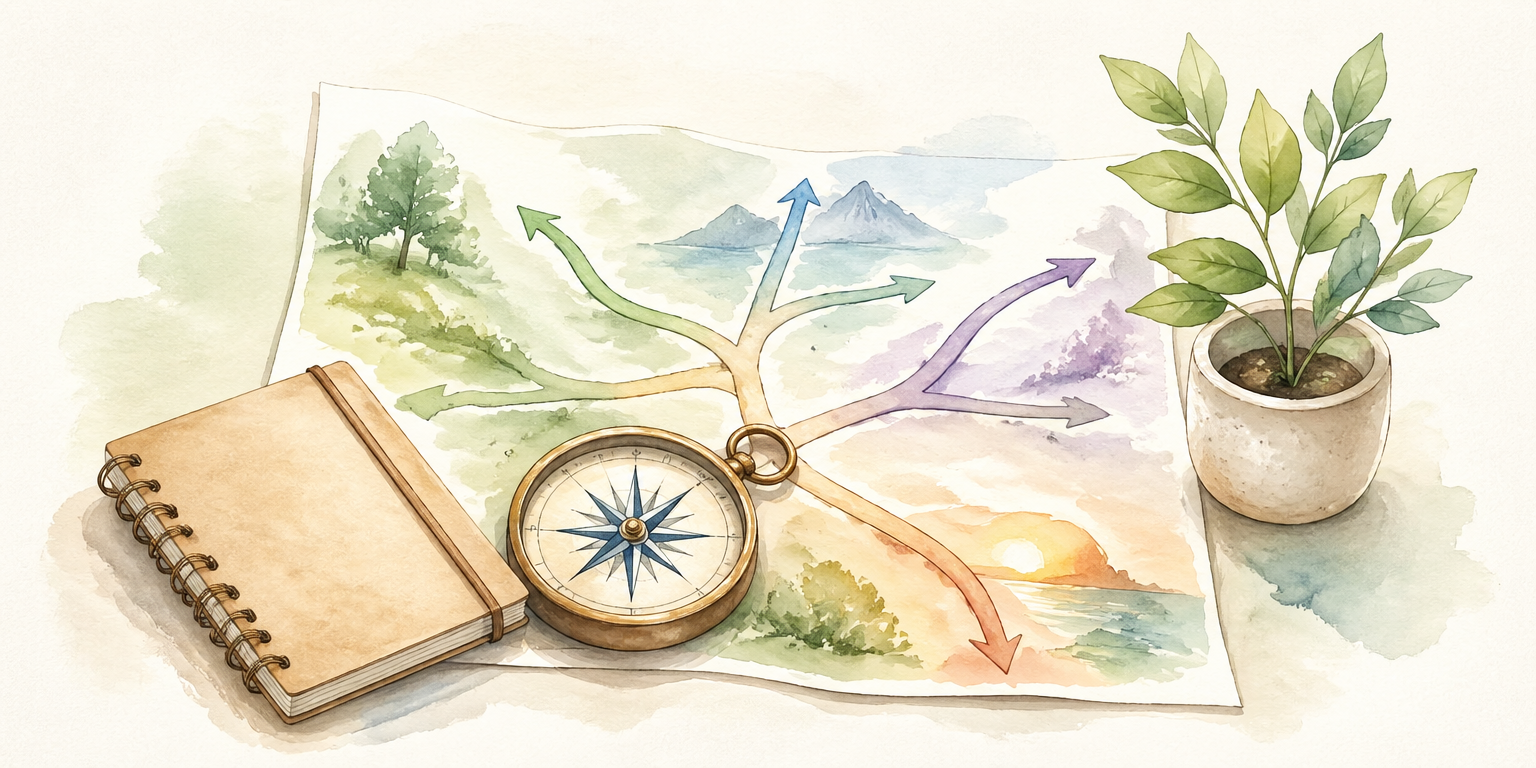
The Type You Say vs. The Type You Chase
The type you list on a dating profile, or describe to your friends over drinks, is basically a spec sheet for a good person. Kind. Stable. Easy to talk to. Driven. Everybody's list looks roughly like this. And it's not a lie. It's the right answer your head knows.
But you don't get pulled toward people with your head. You get pulled with your body. The racing heart, the phone-checking, the doing-math-about-when-you'll-see-them-next. And here's the catch: that physical buzz usually comes from uncertainty, not safety. A good, steady person makes you calm, so your heart doesn't pound. An ambiguous, hot-and-cold person keeps you guessing, so it does. Then we mistranslate the pounding as "chemistry" and the calm as "no spark." We're reading our own anxiety as attraction.
Try something honest. Picture the last person you were genuinely crazy about. Did they make you feel secure, or did they keep you a little off-balance? If it's the second one, it's worth asking whether you were into *them* or into the buzz that uncertainty generates. Those are not the same thing, and learning to tell them apart changes who you date.
Closing this gap starts with admitting your pattern out loud. If you keep saying you want warmth and keep picking aloof people, you didn't lie — you just don't know yourself that well yet. The relationship dynamics guide walks through the architecture of these pulls in more detail, if you want to do an honest autopsy of your own dating history.
Novelty and Growth Are Easy to Confuse
Plenty of people will tell you they're drawn to their opposite. The introvert who falls for the loud one. The planner who falls for the free spirit. This is real and normal — someone who has the thing you lack looks like magic. But there's a fork in the road here, and most people don't notice they're standing at it.
One path is novelty. The other is growth.
Novelty is just stimulation. It's thrilling at first because it's unfamiliar, and then the exact trait you fell for becomes a daily reality and starts to grate. The spontaneity that felt so alive becomes the person who keeps canceling plans. Chase novelty long enough and you end up repeating the same disappointment with a new face every time, muttering "I really thought this one would be different."
Growth is a different animal. Growth is when someone's difference slowly rearranges you. The chronic planner learns to occasionally let a day just happen. The person who could never name a feeling learns, clumsily, to say one out loud. That's not stimulation, that's change — and change is uncomfortable before it's good. It feels less like fireworks and more like mild awkwardness.
Which leads to a genuinely annoying truth: the person who's actually good for you might not make you tingle at first. They're not pressing your familiar buttons. So if you've been screening people out for "no spark," it's at least worth wondering whether that spark you're chasing is really just familiar anxiety in a nicer outfit.

When a Type Hardens Into a Filter
Knowing your type is useful. The problem starts the moment it turns into a checklist for rejecting humans.
"I want someone tall, warm but a little aloof, funny but serious, stable but free-spirited." That person doesn't exist. That's a stack of contradictions wearing a trench coat, and real people keep failing to be it. So you keep disqualifying them, and then you complain that there's nobody good out there. It's not that there's nobody. It's that your filter has a mesh so fine that no actual person can pass through it.
There's a subtler version, too: the two-or-three-date cutoff. You meet someone, hang out a couple of times, decide "eh, not my type," and move on. But look closely — was that a judgment about *them*, or about a narrow category you built from a first impression? Most decent relationships only start showing their real shape around the third or fourth meeting, and we keep pulling the plug on the second.
When a type hardens into a filter, the person who loses most is you. You walk right past someone who might have fit your actual life, because they didn't fit the picture in your head. Almost everyone has met the person who checks every box and leaves them cold, and the person who checks zero boxes and somehow feels like home. Hold those two side by side and you've basically proven how unreliable the map is.
Use Your Type to Know Yourself, Not to Reject People
So am I telling you to throw out the whole concept of a type? No. You don't trash it. You point it in a different direction.
Stop using your type as a standard for grading other people, and start using it as a clue about yourself. Everything flips. If you keep gravitating toward unavailable people, that's not a fact about them — it's a signal that something in you is hunting for that particular texture. Why does only the hard-to-pin-down person make your heart race? Why do you want to run when someone's actually kind to you? Those questions are the real prize. The list of physical traits is just the wrapping paper.
Once you can see your pattern, you get a beat of choice the next time the familiar pull shows up. Just noticing — *oh, here's that pattern again* — creates a gap between the impulse and the action. Instead of getting auto-towed toward the same kind of person, you get to decide whether to do it differently this time. That one extra beat, repeated over months, quietly changes the whole shape of your love life.
A type is a map of you. It is not a scorecard for passing and failing other humans. The genuinely good ones usually show up just outside the picture you drew, which means keeping that picture a little blurry might be the most practical romantic move you can make.
If you're curious about your own pattern of attraction, the ideal type analyzer is a light place to start, and there's more on relationships and personality over in the full guides.
*This post and the quiz are here for the fun of looking at yourself a little more clearly — not as a checklist for screening real people. People are always messier than a spec sheet, and, lucky for us, a lot more interesting. 😊*
Related picks
This section may contain Coupang Partners affiliate links. We may earn a commission from qualifying purchases.
커플 문답 카드
편지지 세트
캔들 선물세트
Try This Quiz
Taking the quiz is even better than reading about it!
Related Articles
Why You Keep Falling for the Same Type (and When It's Worth a Second Look)
A type isn't a flaw, but it can quietly become a tax — here's how to tell a real preference from a repeating pattern, and how to widen the lens without pathologizing yourself.
Read More
The 5 Flirting Styles and What They Actually Look Like to Other People
Bold, subtle signaler, humor, warm caretaker, and tsundere. How each flirting style reads to others, where it gets misread, and which mixes spark.
Read More
He Texts Back Fast, But Does He Like You? Reading Signals Without Lying to Yourself
He replies fast and knows your sister's name — but does he like you? Separate what he did from what you hoped it meant. One honest question beats screens.
Read More