The 5 Flirting Styles and What They Actually Look Like to Other People
Bold, subtle signaler, humor, warm caretaker, and tsundere. How each flirting style reads to others, where it gets misread, and which mixes spark.
Two people are sitting across from each other in a coffee shop. One of them is cracking a joke every thirty seconds, laughing at their own lines and getting the other person to laugh too. The other one barely talks. They keep turning their cup in their hands and only make eye contact when the first person is mid-sentence. Both of them like the other one. They're just showing it in two completely different languages.
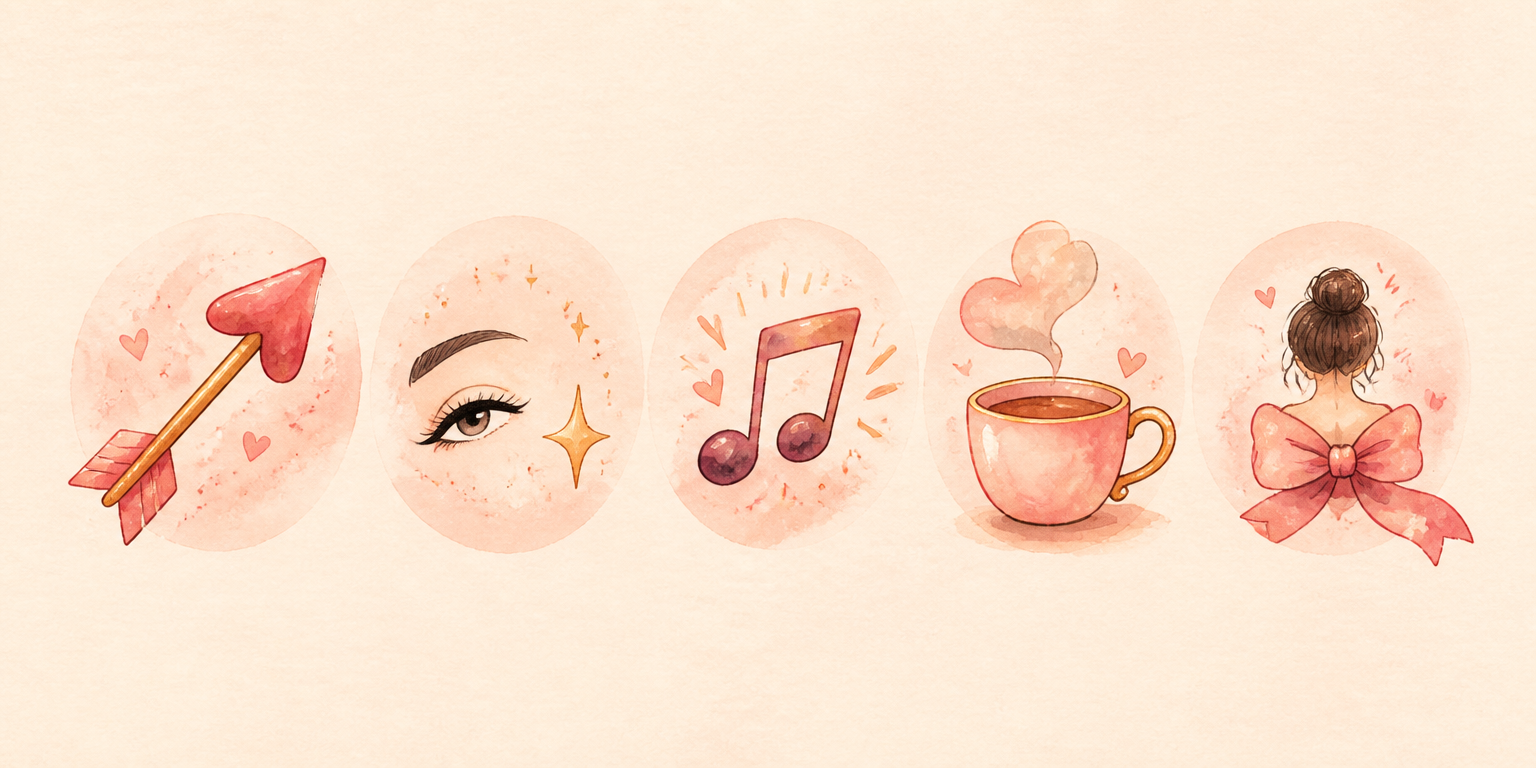
Everybody has a thing their body does automatically when they start liking someone. It isn't a decision you make with your head. It's closer to a reflex, the move that comes out before you've thought about it. This piece breaks that reflex into five styles: the bold direct type, the subtle signaler, the humor-and-charm type, the warm caretaker, and the tsundere, the one who gets playfully prickly when they catch feelings. The point isn't which one is best. The point is knowing which one is actually yours, and how it lands on the person across the table.

The Bold Type — Says It Out Loud
The bold type spends almost no energy hiding anything. They like you, so they tell you you look great today. They ask for your number first. They're the one who says "let's get dinner, just us" instead of waiting for it to somehow happen. It's not that they refuse to play games. It's that the whole concept of the game doesn't really land in their head. Why circle the thing when you can just name it?
For the right person, this is an enormous relief. Anyone who hates the headache of mixed signals feels something settle when they're around a bold flirt: at least I won't have to guess. And being on the receiving end feels good. There's a specific, clean kind of happiness in just being told someone likes you, no decoding required. You know the feeling.
Here's where it gets misread: it can look too fast. When the other person isn't ready yet, the bold type's speed reads as pressure instead of confidence. It also breeds a particular suspicion — "is this person like this with me, or are they like this with everybody?" The most unfair thing about being a bold flirt is that real intensity can come across as cheap. The fix is rarely to dial it down completely. It's to slow the tempo by one beat, because the exact same words land a lot heavier when they're not rushed.
The spark match is the subtle signaler. Subtle people live in low-grade anxiety that their signals aren't being noticed at all, and a bold flirt planting a flag — "hey, I like you" — dissolves that anxiety in one move. Two bold types together? The pace goes from zero to sixty terrifyingly fast, which is fun, but things that catch fire that quickly sometimes burn out just as quickly.
The Subtle Signaler — Sent Everything, Got Nothing
The subtle signaler never just says it. Instead they remember everything you mentioned, they quietly put on the song you said you liked, they answer your one-on-one texts way faster than the group chat. In their own mind they are broadcasting constantly. The problem is that their signal is tuned so fine that it slips right past the other person's radar.
When it does get noticed, though, the payoff is huge. That delayed realization — "wait, were they being like this only with me this whole time?" — produces a flutter that the bold type simply can't replicate. It's a slow-soak kind of attraction, and once someone falls into it, they tend to fall deep.
The misread is almost a fixed route. The other person just doesn't catch it. The subtle signaler gets quietly hurt, thinking "I did all that and they still don't get it?" But from the receiving side, honestly, there may have been nothing visible at all. There's no clean way to tell apart "this person is kind" from "this person likes me." So the subtle signaler often gets filed under "just a really nice person" and that's where it ends. The answer is usually not to send more signals. The answer is to say one direct sentence, once.
The spark match is the bold type or the humor type. When someone else sets the tone first, the subtle signaler relaxes enough to open up a little at a time. Two subtle signalers together is its own special trap — both of them sending signals, and six months later they're still in a "so, um, what are we?" holding pattern. Somebody has to be brave. If you want to map out the patterns you bring into relationships, it's worth a look.

The Humor Type — Making You Laugh Is the Confession
For the humor type, a joke is both the shield and the love letter. The more they like you, the harder they try to be funny. They're reading your reaction in near real time — did that one land, did you actually laugh or just smile — and they love building up inside jokes that belong only to the two of you. Being around them is fun, full stop. That's the weapon.
With someone whose humor matches theirs, it's unbeatable. Tension drops, walls come down fast, and "this person is easy to be around" forms quickly. But the humor type usually knows the catch about themselves, too: the jokes can become a curtain hung in front of anything real.
The misread goes like this: they look like they're not serious. Because everything gets played for a laugh, the other person can't tell whether they're actually liked or just being entertained. And if the humor type bails on the one moment that called for honesty by cracking a joke instead, the other person leaves without ever having seen the real face underneath. Sometimes stopping the bit and saying one flat sentence — "no, but I mean this part" — hits harder than a hundred good lines.
The spark match is the warm caretaker. Caretakers are good at reading the nervousness behind the jokes. When someone notices "you're going for funny right now, but you're actually a little tense, aren't you," the humor type is surprisingly relieved to be seen through. Two humor types together produce nonstop, genuinely great conversation, but neither one wants to drop into serious mode, so the relationship risks staying permanently on the surface, two people having a wonderful time and never quite getting anywhere.
The Warm Caretaker — Liking You Starts With Looking After You
The caretaker expresses feelings through action. When they start liking someone, the first thing that happens is they start taking care of them. Did you eat? Here, take my jacket, it's cold. That thing you mentioned worrying about in passing last week — they bring it back up to check how it went. Their hands move before their mouth does.
From the receiving side, this is deeply warm. "This person actually pays attention to me" gets proven through behavior, not promises. For anyone who feels love through being looked after, the caretaker is close to an ideal match.
But there's a trap. Kindness and attraction look identical from the outside. Caretakers are often nice to everyone by default, so the other person can't read whether this is special-to-me or just how-they-are. Which means the caretaker, like the subtle signaler, easily gets dropped into the "nice person" folder. There's a second risk: overdoing the caretaking until the other person feels smothered, or until the caretaker themselves quietly stacks up resentment — "I do all this and what do I get." The move is to make the intention visible at least once. All the care plus one clear "I like you, specifically" changes everything.
The spark match is the humor type or the tsundere. When a caretaker calmly absorbs the tsundere's prickliness without flinching, the tsundere slowly learns "I don't have to put my spines up around this one." Two caretakers together can be almost too considerate — both so busy looking after the other that neither ever states their own feelings, producing something endlessly sweet and endlessly stalled.
The Tsundere — Prickly, but Somehow Always Around
The tsundere gets more standoffish the more they like you. They'll say "this is whatever" while doing you a favor. They'll give you grief and then not leave your side. They know what they're doing. Getting caught having feelings is mortifying to them, so they cover the feeling with spines. Saying something openly affectionate makes them physically cringe, so they go prickly on purpose instead.
When it works, it works with surprising force. When a person who's usually sharp accidentally lets something sincere slip out, that one sentence carries enormous weight precisely because it's rare. "They're like that with everyone, but every once in a while they soften, only with me" — that exclusivity is the whole appeal.
The misread is basically guaranteed. People think they're just being disliked. All the spines are visible and the feeling behind them is not, so the other person backs off, thinking "I guess they're not into me." The tsundere's signal requires decoding, and not everybody is carrying a decoder. Sometimes putting the spines down for one second and saying "honestly, I like seeing you" is the hardest move for a tsundere and also the single most effective one.
The spark match is the caretaker or the bold type. The bold type doesn't really register the spines. When a bold flirt grins and says "you actually like me, don't you," the tsundere denies it while feeling privately relieved that someone saw through. Two tsunderes together? Neither one can be honest, so they end up liking each other while running on parallel lines — adorable from the outside, going absolutely nowhere on the inside.
What Happens When You Fake a Style That Isn't Yours
This is the most important part. Reading the five above, you might be tempted to pick the one that looks most popular and copy it. The bold type seems impressive, so a naturally subtle person suddenly starts coming on strong. The humor type seems to get all the attention, so a serious person forces out jokes that don't fit them.
It almost never works. The moment you run a move that isn't your reflex, something glitches. The timing is slightly off, your face doesn't match your words, and the other person feels the friction even if they can't name it: "something about this is off." It comes across exactly like a robot malfunctioning, hitting the right motions in the wrong rhythm. People are better than you'd think at telling the real thing from the performance, and a performed flirt reads as a small lie even when the feeling behind it is true.
So the takeaway here is not "upgrade to a better style." It's this: figure out your real reflex, then patch only that style's weak spot. If you're bold, slow the tempo by a beat. If you're subtle, say one direct sentence at the decisive moment. If you're a humor type, stop the bit occasionally. If you're a caretaker, make your intention explicit. If you're a tsundere, put the spines down once. Keep your base and just sand off the rough edge — that's the version of you that's both the most natural and the most attractive. Trying to be a different person, by contrast, makes you less attractive and more tired.
And if you're sitting here going "wait, which one am I," that's normal. Most people are a blend of two. Someone is a caretaker day to day but flips bold the moment they actually fall for someone. Someone is the humor type with friends but turns full tsundere in front of a crush. The reflex can even change depending on who's across the table, which is part of why it's worth knowing your real one instead of the one you wish you had.
Wrapping Up
If you want a quick, low-stakes read on which style is actually yours, take the flirting style quiz. It's more fun to send it to a friend or a situationship and compare — once you both know each other's styles, things click into place, like realizing that the prickly one was actually signaling the whole time. If you want to look deeper at your relationship patterns, the relationship dynamics hub and the full guides are good next stops.
Note: This is a mirror for your own reflex, not a dating coaching manual. People pull out different colors depending on the situation and the person, and real attraction never fits neatly into five labels. Read it for fun, smile when you spot your actual reflex, and leave it at that. 😊
Related picks
This section may contain Coupang Partners affiliate links. We may earn a commission from qualifying purchases.
커플 문답 카드
편지지 세트
캔들 선물세트
Try This Quiz
Taking the quiz is even better than reading about it!
Related Articles

The Psychology of Having a Type (And Why Yours Keeps Lying to You)
Why we fall for the same kind of person, the gap between the type you claim and the one you chase, and when a type quietly screens out good people.
Read More
He Texts Back Fast, But Does He Like You? Reading Signals Without Lying to Yourself
He replies fast and knows your sister's name — but does he like you? Separate what he did from what you hoped it meant. One honest question beats screens.
Read More
The Honest Checklist Before You Text Your Ex Back
Did the real reason you broke up change, or are you just lonely? Missing the person vs. the routine, the 1am test, and what closure really looks like.
Read More