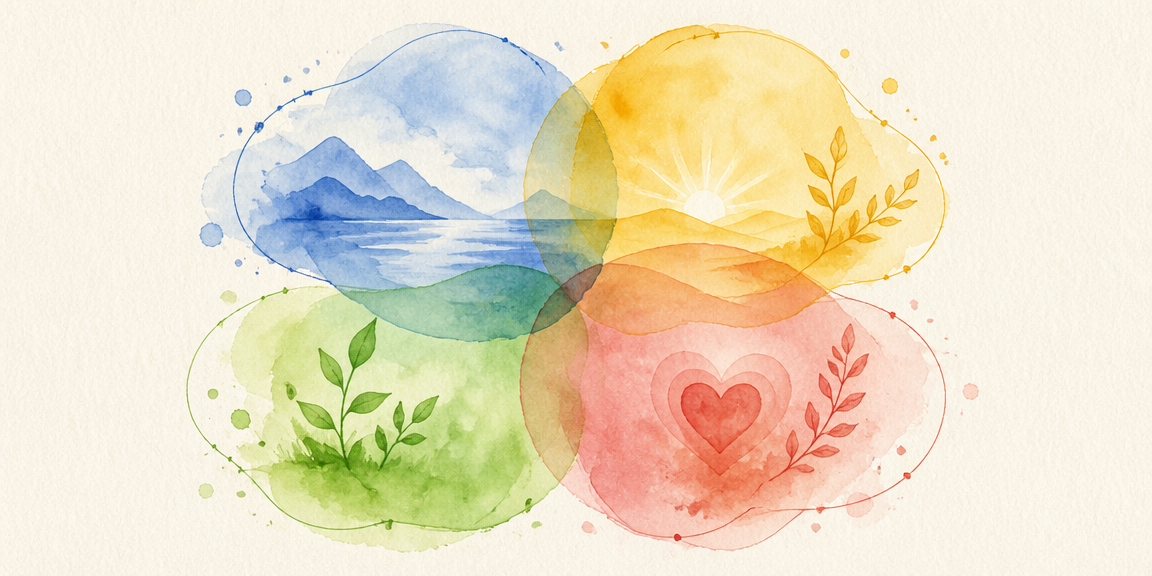
What Your Personality Color Reveals About You — A Deep Dive
Discover the science behind personality colors. Explore the four color types — Red, Blue, Yellow, and Green — and learn how they shape your workplace behavior, relationships, and personal growth.
The Science Behind Personality Colors
Personality color systems categorize human behavior into four fundamental types, each represented by a color. While the specific color assignments vary between frameworks — Don Lowry's True Colors, Taylor Hartman's Color Code, and Insights Discovery all use slightly different schemas — the underlying model traces back to one of psychology's oldest ideas: Hippocrates' four temperaments (choleric, sanguine, phlegmatic, melancholic).
Modern color personality theory proposes that every person has a dominant color that drives their core motivations, communication style, decision-making approach, and stress responses. Most people are a blend of two or three colors, but the primary color emerges most clearly under pressure. If you haven't found your dominant color yet, the personality color quiz gives you a starting read in a few minutes.
What Does Color Psychology Actually Say?
Color psychology — the study of how colors influence human emotion, cognition, and behavior — provides a scientific backdrop for personality color systems. Research by Andrew Elliot and Markus Maier has demonstrated measurable effects: exposure to red activates avoidance motivation and heightens alertness, while blue environments promote creative thinking and calm focus. We cover that research — along with the Lüscher test and how brands put color to work — in our color psychology guide.
Importantly, personality color tests do not claim that your favorite color determines your personality. Instead, they use color as a metaphorical shorthand for behavioral patterns that are more intuitive and memorable than abstract type labels.
The Four Personality Colors Explained
Red — The Driver
Red personalities are goal-oriented, decisive, and competitive. They thrive on challenge, move fast, and value efficiency above all else. In Hartman's Color Code, Red corresponds to the need for power — not in the manipulative sense, but as the drive to produce results and maintain control over outcomes.
Core Traits: - Direct and assertive communication - Quick decision-making (sometimes too quick) - High tolerance for risk and conflict - Results over process; action over discussion - Natural crisis managers
In the Workplace: Reds excel as project leaders, entrepreneurs, turnaround specialists, and executives. They need clear goals, autonomy, and the freedom to move fast. Micromanagement is their kryptonite. When managing a Red, give them a target and get out of their way.
In Relationships: Reds are loyal but not naturally expressive. They show love through action — solving problems, providing security, taking charge of logistics. Their partners sometimes wish for more emotional warmth, and healthy Reds learn to slow down and listen without immediately jumping to solutions.
Growth Edge: Developing patience, active listening, and emotional vulnerability.
Blue — The Analyst
Blue personalities are analytical, systematic, and quality-driven. They value accuracy, consistency, and thorough understanding. In the temperament model, Blue corresponds to the melancholic type — deep thinkers who seek meaning and precision in everything they do.
Core Traits: - Methodical and detail-oriented - High standards (sometimes perfectionist) - Data-driven decision-making - Reserved and thoughtful communication - Strong sense of duty and reliability
In the Workplace: Blues thrive in roles requiring analysis, research, quality assurance, strategic planning, and compliance. They need adequate preparation time, clear expectations, and logical reasoning behind decisions. Springing surprises or rushing them leads to stress and disengagement.
In Relationships: Blues form deep, lasting bonds but struggle with emotional expression. They demonstrate care through consistency, reliability, and thoughtful gestures rather than grand romantic displays. They value loyalty and intellectual connection.
Growth Edge: Embracing imperfection, taking action before all data is available, and expressing emotions directly.
Yellow — The Inspirer
Yellow personalities are social, optimistic, and creative. They draw energy from people and ideas, radiating enthusiasm that can light up an entire room. In the temperament model, Yellow aligns with the sanguine type — the life of the party who connects effortlessly with others.
Core Traits: - Enthusiastic and expressive - Creative and idea-rich - Strong interpersonal skills - Adaptable and spontaneous - Motivating and inspiring to others
In the Workplace: Yellows shine in sales, marketing, education, event planning, public relations, and any role involving persuasion or human connection. They need variety, social interaction, and recognition. Isolating them in a cubicle with repetitive tasks is a recipe for disengagement.
In Relationships: Yellows are warm, affectionate, and adventurous partners. They crave variety, shared experiences, and emotional expression. Their challenge is follow-through — they may commit to plans enthusiastically and then lose interest when something more exciting appears.
Growth Edge: Developing focus, follow-through, active listening, and comfort with silence.
Green — The Harmonizer
Green personalities are empathetic, patient, and stability-oriented. They prioritize harmony, both in their environment and in their relationships. In the temperament model, Green corresponds to the phlegmatic type — calm, supportive, and deeply attuned to the needs of others.
Core Traits: - Excellent listener and mediator - Patient and dependable - Team-oriented and supportive - Conflict-averse (sometimes to a fault) - Values routine and predictability
In the Workplace: Greens excel in counseling, human resources, customer service, nursing, teaching, and team coordination roles. They create psychological safety within teams and are often the glue holding groups together. They need stability, appreciation, and time to process change.
In Relationships: Greens are devoted, nurturing partners who prioritize their loved ones' needs. They provide emotional stability and unwavering support. Their challenge is asserting their own needs — they may suppress frustration until it explodes or turns into passive-aggressive behavior.
Growth Edge: Setting boundaries, expressing needs directly, embracing change, and tolerating healthy conflict.
How Color Types Interact in Teams
The most effective teams contain a balanced mix of all four colors:
- Red sets the direction and maintains momentum
- Blue builds the detailed plan and ensures quality
- Yellow energizes the team and generates creative solutions
- Green mediates conflicts and keeps everyone connected
Problems arise when one color dominates. An all-Red team moves fast but burns out and clashes internally. An all-Blue team produces perfect plans but never ships. An all-Yellow team generates brilliant ideas with no execution. An all-Green team maintains harmony but avoids difficult decisions.
Communication Across Colors
Understanding color types transforms workplace communication:
- With Reds: Be direct, brief, and results-focused. Skip the small talk and get to the point.
- With Blues: Come prepared with data and logic. Give them time to analyze before expecting decisions.
- With Yellows: Be energetic and enthusiastic. Allow brainstorming before narrowing down options.
- With Greens: Be warm and patient. Provide reassurance during changes and genuinely ask for their input.
Beyond the Four Colors: Growth and Integration
The ultimate goal of understanding your personality color is not to box yourself in, but to recognize your default patterns so you can consciously develop the qualities of other colors — the same advice we give for every framework in our personality guides. A mature Red learns Green's empathy. A mature Blue adopts Yellow's flexibility. A mature Yellow builds Blue's discipline. A mature Green cultivates Red's assertiveness.
This integration process is where personality color theory becomes genuinely transformative. You are not limited to one color — you are capable of the full spectrum. Your dominant color is simply where you start the journey. And if the color lens appeals to you, the aura color quiz reads the same instinct from a softer, more intuitive angle.
Some of the frameworks here are well-researched, some are mostly tradition. The books and studies behind each one — and how solid each is — are listed in our editorial sources.
Take the quiz
What Is Your Personality Color?
Reading about it is good — finding your own result is better.
Read the in-depth guide
Personality Guide
Related Articles
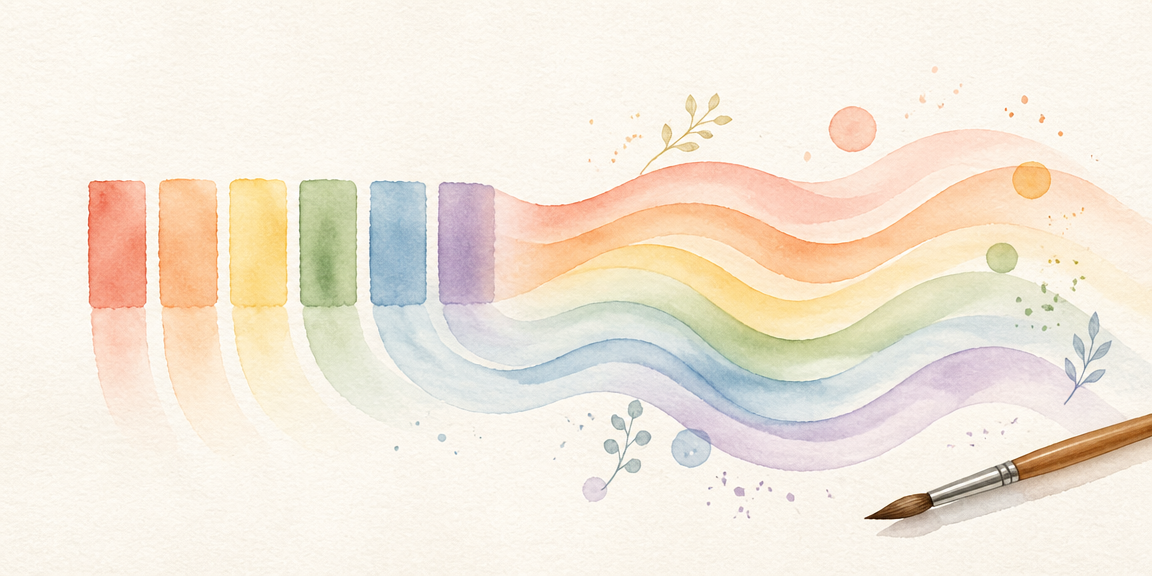
Color Psychology: What Your Favorite Color Says About You
Explore the science of color psychology — from the Lüscher Color Test to cultural differences in color meaning and how brands use color to influence your decisions.
Read More
Field Notes 02 — How a Selvora Quiz Gets Written
Why we draft thirty questions and keep twelve, and why every result type gets the same word count. The editorial rules a Selvora quiz has to pass before it ships.
Read More
How to Find Your Core Values (and Actually Use Them Day to Day)
Core values aren't pretty words on a poster. Here's a method to surface yours from past decisions, narrow 20 down to 4, and use them as a real decision filter.
Read More